New Delhi, Apr 22 The Supreme Court was on Thursday told by an association of Dawoodi Bohra community that its practice of excommunication was protected and constitutional morality cannot be used to restrict the rights granted under the Constitution.
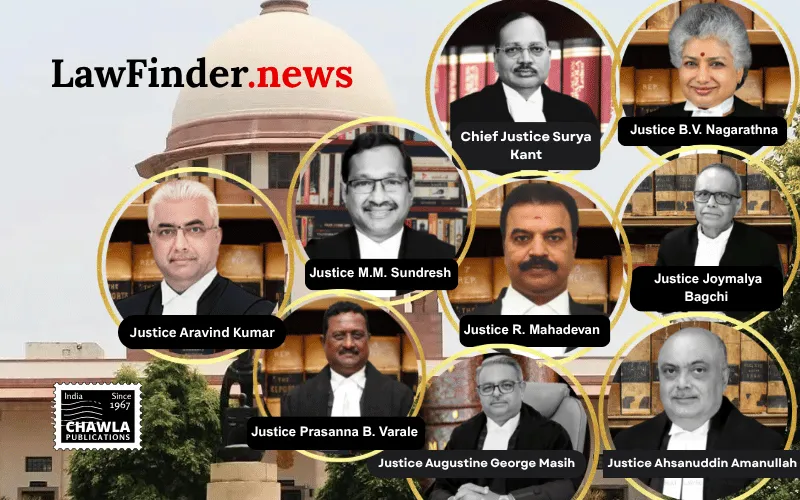
A nine-judge Constitution bench headed by Chief Justice Surya Kant is also examining the question whether the community's religious head's power to expel member(s) from religious life can coexist with the individual's right to profess and practice religion under Article 25.
Senior advocate Mukul Rohtagi, appearing for the association, said that every religion has its own morals, which may have been in existence for thousands of years.
"What is moral for one, may not be moral for another and what is immoral for one, may not be immoral for some," Rohatgi submitted while referring to the practice of Digambar jain monks and Naga Sadhus, who wear no clothes is accepted as part of religious practice.
He submitted that similarly, dietary habits differ across religions and Hindus may avoid certain foods and Muslims avoid others.
"These are part of religious evolution. There are also dress codes and practices. In some temples, one must go bare-chested. In gurdwaras, one must cover the head. Some temples prohibit leather items. These are not questions of morality in a general sense, but matters specific to religious practice and denomination.
"Therefore, to give the state a wide power to legislate on morality, as commonly understood, would not be appropriate in the context of Article 25. Morality must be understood within the framework of religion itself," he told the bench also comprising Justices B V Nagarathna, M M Sundresh, Ahsanuddin Amanullah, Aravind Kumar, Augustine George Masih, Prasanna B Varale, R Mahadevan, and Joymalya Bagchi.
Rohatgi submitted that constitutional morality has no place in creating a restriction on the rights under Articles 25 and 26.
"Morality is already a restriction under Articles 25 and 26 of the Constitution. The moment you introduce 'constitutional morality', you are either expanding the meaning of morality beyond what the Constitution provides, or you are adding an additional restriction ... The moment you create an additional restriction by constitutional morality, you are diluting the content of Articles 25 and 26," he said.
Rohatgi said morality must also meet the threshold and the state's power to legislate on morality must therefore satisfy a high standard.
"Further, morality must be viewed through the lens of religion… What is obligatory in one faith may not be so in another. Every religion has developed its own moral codes over centuries," he said.
Senior advocate Neeraj Kishan Kaul also made brief submissions for the head of the Dawoodi Bohra community. He will continue his submissions on Thursday.
The reference to the nine-judge bench was made by the five-judge bench on the challenge to the 1962 verdict of the Bombay High Court which had upheld the power of excommunication as protected religious practice.