Supreme Court Reinstates Auction Sale, Enforces Strict Compliance with Civil Procedure Code Judgment debtors precluded from challenging execution sale due to procedural oversight, Supreme Court clarifies legal obligations
In a significant ruling, the Supreme Court of India has overturned a decision by the Madras High Court, thereby reinstating an auction sale of immovable property conducted in 2002. The case, G.R. Selvaraj (Dead) v. K.J. Prakash Kumar, examined the obligations of judgment debtors under Order XXI Rule 90(3) of the Civil Procedure Code (CPC), emphasizing the necessity for timely objections to execution sales.
The original case involved a financial dispute dating back to 1995, where the decree holder, Rasheeda Yasin, sought to recover a sum of ?3,75,000 plus interest from the defendants, Komala Ammal and K.J. Prakash Kumar. Following an ex parte decree in her favor, execution proceedings led to the attachment and sale of the defendants' property in Chennai to satisfy the decree.
The auction sale was challenged by the judgment debtors on grounds of procedural irregularities, particularly focusing on the reduction of the upset price without their notice and the failure of the executing court to consider whether a partial sale of the property could satisfy the decree. The High Court had previously set aside the sale, citing these procedural lapses.
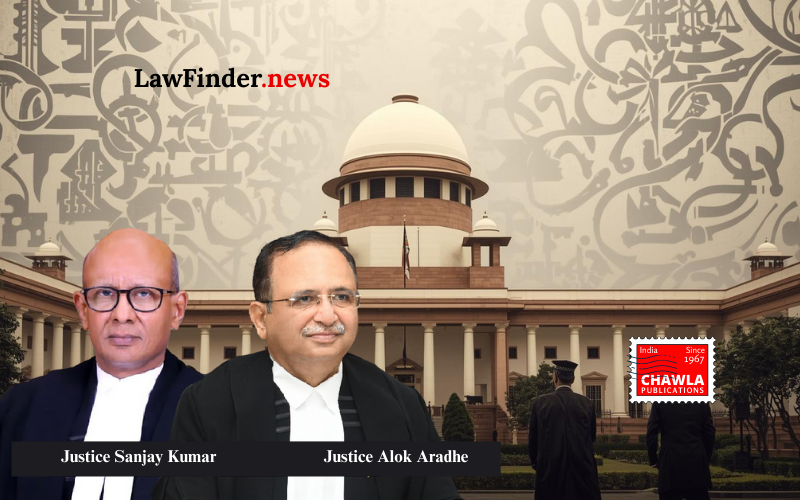
However, the Supreme Court, led by Justices Sanjay Kumar and Alok Aradhe, highlighted the critical amendment to Order XXI Rule 90 CPC in 1976, which bars judgment debtors from raising objections to execution sales that they could have presented before the sale proclamation. The Court found that the judgment debtors had been duly notified at each stage of the execution process, participated in proceedings to some extent, and failed to raise their objections at the appropriate time.
The Supreme Court's decision underscores the legislative intent of Order XXI Rule 90(3) CPC to prevent dilatory tactics by judgment debtors, thereby ensuring the efficiency of judicial processes. The ruling also clarifies that while executing courts have a duty to consider partial sales under Order XXI Rule 66(2)(a) CPC, this does not absolve judgment debtors from their responsibility to raise timely objections.
This judgment reinforces the procedural rigor expected in execution proceedings and serves as a reminder of the binding nature of statutory provisions on all parties involved in litigation.
Bottom Line:
Execution of decree - Sale of immovable property - Judgment debtor barred from raising grounds to set aside sale under Order XXI Rule 90(3) CPC if such grounds were available but not raised prior to the proclamation of sale.
Statutory provision(s): Order XXI Rule 90(3) CPC, Order XXI Rule 66(2)(a) CPC, Order XXI Rule 64 CPC.
G.R. Selvaraj (Dead) v. K.J. Prakash Kumar, (SC) : Law Finder Doc Id # 2812390