Supreme Court Upholds Dismissal of Execution Proceedings: Litigants Cannot Reopen Abandoned Issues Landmark ruling emphasizes the finality of abandoned suits and bars relitigation through collateral proceedings.
In a significant judgment delivered on March 25, 2026, the Supreme Court of India upheld the dismissal of execution proceedings initiated by Sharada Sanghi and others against Asha Agarwal and others. The ruling, a pivotal decision concerning civil litigation principles, reinforces the doctrine that execution proceedings cannot be employed to revive issues abandoned in prior suits.
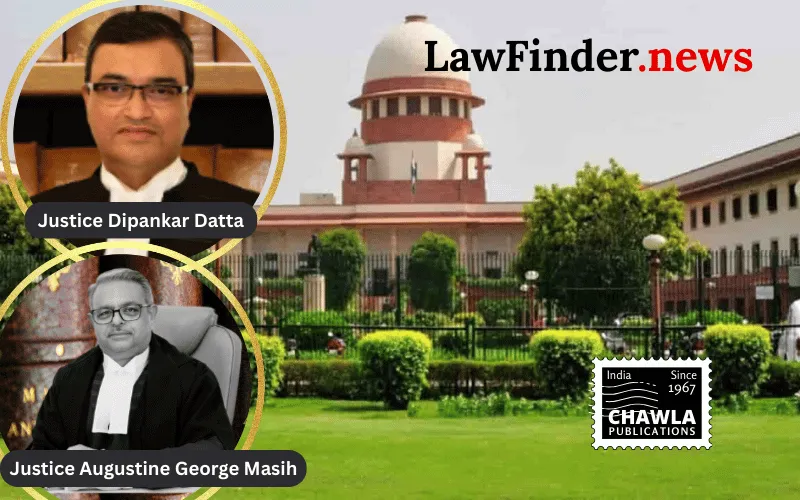
The bench, comprising Justices Dipankar Datta and Augustine George Masih, dismissed the civil appeal filed by Sharada Sanghi, affirming the earlier judgments of the Andhra Pradesh High Court and the Additional Chief Judge, City Civil Court, Hyderabad. The appellants had sought execution of a decree for specific performance related to an immovable property in Hyderabad, but the respondents objected, claiming independent title through sale deeds executed in their favor.
The Supreme Court scrutinized the procedural history of the case, where the appellants had previously instituted suits (O.S. Nos. 892 and 893 of 1990) seeking cancellation of the respondents’ sale deeds. These suits were dismissed for default, and subsequent restoration attempts also failed. The appellants did not pursue further remedies, allowing the dismissal to attain finality.
The Court held that while dismissal for default does not constitute res judicata under Section 11 of the Civil Procedure Code, the broader principle akin to "nemo debet bis vexari, si constet curiae quod sit pro una et eadem causa" applies. This principle bars relitigation of the same issues through collateral proceedings, emphasizing the finality of judicial decisions and preventing repeated litigation over the same matter.
Justice Datta, writing for the bench, noted that the appellants' conduct in abandoning earlier suits and failing to pursue restoration remedies precluded them from reopening the same issues in execution proceedings. The Court stressed the importance of procedural fairness and equity, ruling that allowing such relitigation would constitute an abuse of the judicial process.
The judgment also highlighted the discretionary nature of specific performance under the Specific Relief Act, emphasizing that courts must assess the conduct of parties, including abandonment or non-prosecution of earlier proceedings.
This decision is expected to have wide-ranging implications for civil litigation, reinforcing the principle that judicial process is designed to resolve genuine disputes and not facilitate repetitive claims. The ruling serves as a cautionary tale for litigants, underscoring the need for diligence and consistency in pursuing legal remedies.
Bottom Line:
Execution proceedings cannot be used to revive issues that have already been abandoned or allowed to attain finality in earlier suits. The conduct of a litigant in abandoning earlier suits or allowing them to be dismissed for default bars further litigation on the same matter through other proceedings.
Statutory provision(s): Civil Procedure Code, 1908 - Order XXI Rules 99 to 101, Section 11, Order IX Rule 9; Specific Relief Act, 1963 Section 20
Sharada Sanghi v. Asha Agarwal, (SC) : Law Finder Doc id # 2871709