Supreme Court Quashes MHA's Decision; Orders Premature Release of Rohit Chaturvedi, Apex Court Finds MHA's Rejection of Remission for 22-Year Incarcerated Convict Arbitrary and Non-Speaking
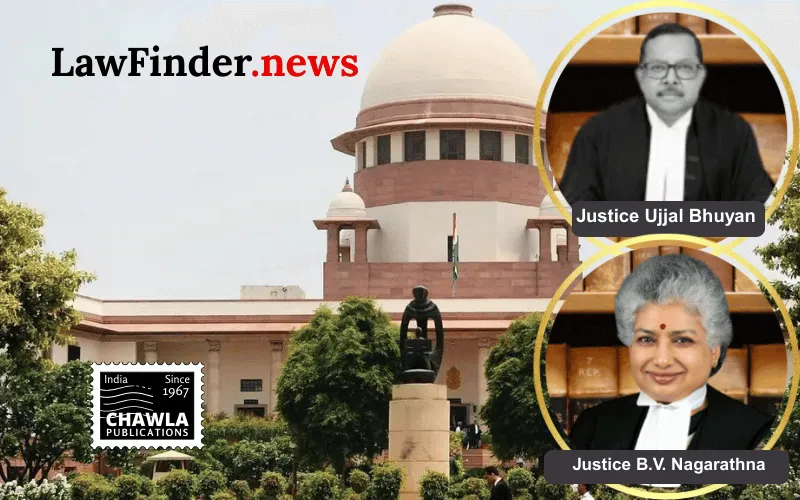
In a landmark judgment, the Supreme Court of India has quashed the Ministry of Home Affairs' (MHA) decision to deny premature release to Rohit Chaturvedi, who has been serving a life sentence for over 22 years. The bench, comprising Justices B.V. Nagarathna and Ujjal Bhuyan, criticized the MHA's rejection as arbitrary and lacking in transparency, emphasizing the need for reasoned decisions in matters affecting personal liberty.
Rohit Chaturvedi was convicted under Sections 120B/302 of the Indian Penal Code for murder in a trial conducted by the Special Court in Dehradun, Uttarakhand. Despite a recommendation from the State of Uttarakhand for his premature release, the MHA had disallowed the proposal, citing the seriousness of the crime without providing specific reasons.
The Supreme Court highlighted that the decision to deny remission cannot rest solely on the heinousness of the crime but must consider factors like reformation and societal reintegration. The judgment emphasized that the role of remission is distinct from sentencing and should focus on the prisoner's conduct and potential for rehabilitation.
The apex court noted that one of Chaturvedi's co-accused had already been granted premature release by the Uttar Pradesh government, raising questions of fairness and parity. The court stressed that such decisions must be made on rational and non-discriminatory grounds, ensuring that the principles of natural justice are upheld.
The bench ordered that Chaturvedi, who is currently out on interim bail, be treated as prematurely released, underscoring the reformative objectives of the criminal justice system. The court's decision marks a significant affirmation of the need for transparency and fairness in executive decisions affecting individual freedoms.
The ruling reiterates the judiciary's role in safeguarding constitutional rights and ensuring that executive discretion is exercised judiciously. This judgment is expected to have far-reaching implications for the administration of remission policies across India.
Bottom Line:
Executive orders affecting liberty must be reasoned and non-arbitrary. Denial of remission cannot solely rest on the heinousness of the crime but must assess factors like reformation and parity with co-accused.
Statutory provision(s): Section 432 of the Criminal Procedure Code, 1973, Section 473 of Bharatiya Nagarik Suraksha Sanhita, 2023, Articles 72 and 161 of the Constitution of India.
Rohit Chaturvedi v. State of Uttarakhand, (SC) : Law Finder Doc id # 2899623