New Delhi, Mar 12 The Centre on Thursday informed the Supreme Court that experts have opined against dilution of guidelines that bar transgenders, gay men and sex workers from donating blood.
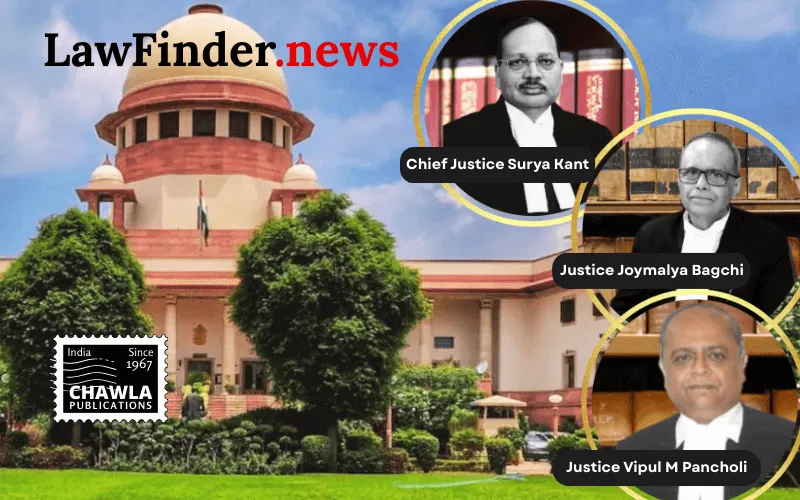
The Centre told a bench of Chief Justice Surya Kant and Justices Joymalya Bagchi and Vipul M Pancholi that following the apex court's direction passed last May, experts have reconsidered the issue.
“There is a reconsidered opinion that if this ban is diluted, it will be injurious to others,” Additional Solicitor General Aishwarya Bhati, appearing for the Centre, said.
The top court was hearing three pleas challenging the 2017 guidelines that exclude transgender individuals, men having sex with men, and female sex workers from being blood donors.
During the hearing, senior advocate Jayna Kothari, appearing for the petitioners, said the “discriminatory” guidelines put a blanket ban on transgenders from donating blood.
The CJI asked, “Tell us one good reason why we should issue such a direction.”
The bench said there are millions of poor people who utilise the facility of blood banks, and they can't afford private hospitals.
“Even if there is a 1 per cent chance of any infection, why should they be affected?" the CJI asked.
The petitioners’ counsel said that while there should not be even 1 per cent risk to anybody, once blood is donated by any person, the same is tested, which includes HIV testing.
The top court pointed out that donation and acceptance were voluntary.
The counsel said there could be a heterosexual person whose blood may also be risky.
The bench, which termed it a "luxury litigation", admitted the pleas for a hearing.
While hearing the matter last May, the top court directed the Centre to seek expert opinion on removing the bias in the guidelines that bar transpersons, gay men and sex workers from donating blood.
The Centre said the guidelines challenged in the petitions were issued by the National Blood Transfusion Council, which viewed these categories as "high-risk" and barred them from donating blood.
The pleas have challenged the 2017 Guidelines on Blood Donor Selection and Blood Donor Referral issued by the National Blood Transfusion Council and the National Aids Control Organisation under the aegis of the Union health ministry.
The Centre, in its reply, referred to "substantial evidence" to demonstrate that transpersons, men having sex with men and women sex workers were at "risk of HIV, Hepatitis B or C infections".
On September 6, 2023, the top court said a recipient must be assured of being transfused clean blood.
The petitioners contended that people being asked to disclose their sexual identity and orientation for donating blood was discriminatory.
One of the pleas alleged that transpersons, gay and bisexual men, who requested to donate blood during the Covid-19 pandemic, when their community and family members needed blood for emergency medical treatment, were turned away due to "permanent deferral under the impugned guidelines".
These guidelines are "stigmatising" as they are neither based on how HIV transmissions actually happen nor on the actual risk involved in specific activities, but on the sexual identity and orientation of the donors, the plea contended.