Supreme Court Quashes Unjustified Warning Against Advocate in Frivolous Complaint Case, Apex Court Overturns Bar Council's Decision to Warn Advocate Prem Pal Singh, Upholds State Bar Council's Findings of Malicious Intent
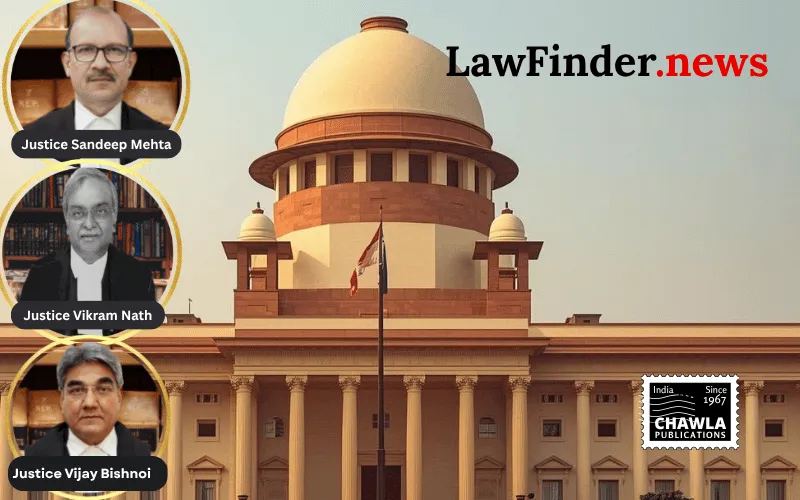
In a significant ruling, the Supreme Court of India has overturned a decision by the Disciplinary Committee of the Bar Council of India, quashing an unjustified warning issued against advocate Prem Pal Singh. The Supreme Court's judgment, delivered by Justices Vikram Nath, Sandeep Mehta, and Vijay Bishnoi, has brought clarity to a case involving alleged professional misconduct motivated by personal vendetta.
The appellant, Prem Pal Singh, a practicing advocate at the Moradabad Courts and enrolled with the Bar Council of Uttar Pradesh, had been embroiled in a legal battle stemming from a complaint filed by his brother-in-law, who also serves as an Inspector in the GST Department. This complaint alleged threats and abusive conduct by Singh, purportedly occurring on March 18, 2021.
The State Bar Council, after a thorough investigation, dismissed the complaint, labeling it as frivolous and motivated by malice, particularly due to ongoing matrimonial discord between the complainant and Singh's sister. The Council not only dismissed the complaint but also imposed a cost of Rs. 25,000 on the complainant, recognizing the complaint's vexatious nature.
Upon appeal, the Bar Council of India upheld the State Bar Council's findings, agreeing that the complaint was without merit. However, it controversially issued a warning to Singh, advising him against threatening behavior, and waived the cost imposed on the complainant.
Singh challenged this decision before the Supreme Court, arguing that the warning and cost waiver were baseless and unjustified. The Supreme Court concurred, emphasizing the lack of evidence supporting the Bar Council of India's decision to issue a warning. The Court noted the acceptance of the complaint's frivolous nature by both councils and found no reason for the additional observations against Singh.
The Supreme Court's ruling underscores the importance of safeguarding advocates from frivolous complaints, ensuring that personal vendettas do not translate into professional misconduct allegations without substantial proof. The decision also reinstates the cost imposed by the State Bar Council, reinforcing the principle that unfounded complaints should bear consequences.
This judgment serves as a reminder of the judiciary's role in protecting the integrity of legal practitioners while balancing the need for accountability. It highlights the critical examination required in disciplinary proceedings to prevent misuse of the Advocates Act, 1961, particularly Sections 35 and 38, which govern misconduct proceedings against advocates.
Bottom Line:
Frivolous complaint filed with oblique motives - Disciplinary Committee of Bar Council of India issuing warning without justification - Warning and observations quashed by Supreme Court.
Statutory provision(s): Advocates Act, 1961, Sections 35, 38