In a significant ruling, the Gauhati High Court addresses lapses by state authorities leading to the death of Ratan Narzary, directing compensation for his family.
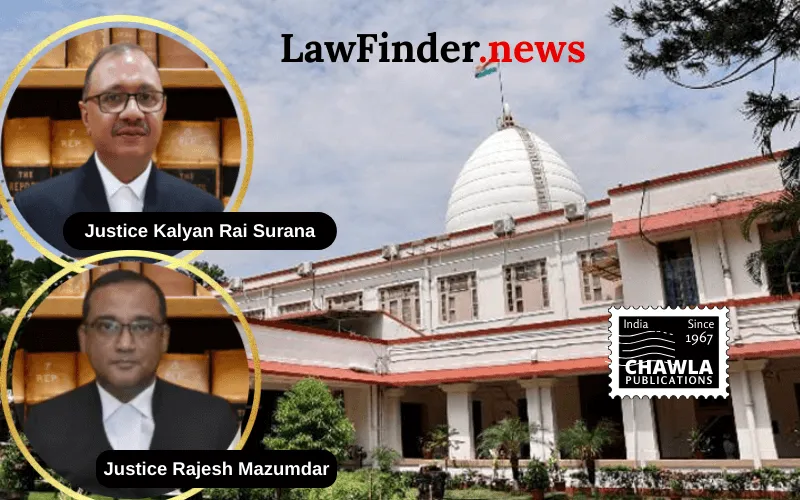
In a landmark judgment, the Gauhati High Court has awarded compensation to the family of Ratan Narzary, who died in a police encounter that has been alleged as a fake encounter. The judgment, delivered by the division bench comprising Justice Kalyan Rai Surana and Justice Rajesh Mazumdar, meticulously scrutinizes the circumstances surrounding the encounter, highlighting the lapses and inefficiencies in handling intelligence inputs by state authorities.
The case, titled Anil Narzary v. Union Of India, revolves around the death of Ratan Narzary, who was claimed to have been killed while dealing illegally in arms with extremist groups. The petitioner, Anil Narzary, brother of the deceased, contended that Ratan was killed in a fake encounter orchestrated by the police with the alleged assistance of the army.
The court examined the intelligence inputs available to the police prior to the incident, which suggested Ratan's involvement in illegal arms trade. Despite having specific information, the state authorities failed to act timely and decisively, leading to a situation where an encounter became inevitable. This negligence, the court held, constituted a violation of Ratan Narzary's fundamental right to life under Article 21 of the Constitution of India.
The judgment underscored the importance of due investigation and procedural compliance, emphasizing the need for timely action on intelligence inputs to prevent loss of life. The court noted the absence of documented preparation for the ambush, raising concerns over the procedural integrity of the operation.
In light of these findings, the court directed the Union of India and the State of Assam to compensate the family of the deceased. The wife of Ratan Narzary will receive Rs. 5,00,000/- each from both the Union and the State, and each surviving child will receive Rs. 2,50,000/- from both entities. This compensation is deemed necessary to remedy the violation of fundamental rights and to support the family left bereaved and financially strained by the loss.
The judgment also affirms that the compensation awarded does not preclude the aggrieved party from pursuing additional remedies in private law or other forums for further compensation. It aligns with precedents set by the Supreme Court in cases like Nilabati Behera v. State of Orissa, which established that monetary relief can be granted in writ jurisdiction for fundamental rights violations.
The Gauhati High Court's decision is a pivotal reminder of the state's obligation to protect citizens' rights and the need for accountability in law enforcement operations. It sends a clear message on the consequences of procedural lapses and reinforces the judiciary's role in safeguarding civil liberties.
Bottom Line:
Custodial death and alleged fake encounter - Compensation awarded to the family of the deceased due to lapses in timely action and preparation by the State authorities, violating Article 21 of the Constitution of India.
Statutory provision(s): Article 21 of the Constitution of India, Article 226
Anil Narzary v. Union Of India, (Gauhati)(DB) : Law Finder Doc id # 2835785