High Court Emphasizes Judicial Discretion in Summoning Additional Witnesses Must Be Exercised Judiciously
In a significant decision, the Gauhati High Court has overturned an order by the Additional Sessions Judge, Kamrup (M), which allowed summoning of additional witnesses in a defamation case against Rahul Gandhi. The High Court emphasized the importance of exercising judicial discretion judiciously under Section 254(2) of the Code of Criminal Procedure (Cr.P.C.).
The case originated from an incident on December 12, 2015, when Rahul Gandhi, during a visit to Barpeta, allegedly made defamatory remarks. These remarks were published, leading to a complaint and subsequent registration of C.R. Case No. 559/2016 under Sections 499 and 500 of the Indian Penal Code (IPC).
The trial court had earlier dismissed an application by the complainant to summon three additional witnesses, citing lack of specific and necessary grounds. However, this decision was overturned by the Additional Sessions Judge, prompting Rahul Gandhi to challenge the order in the High Court.
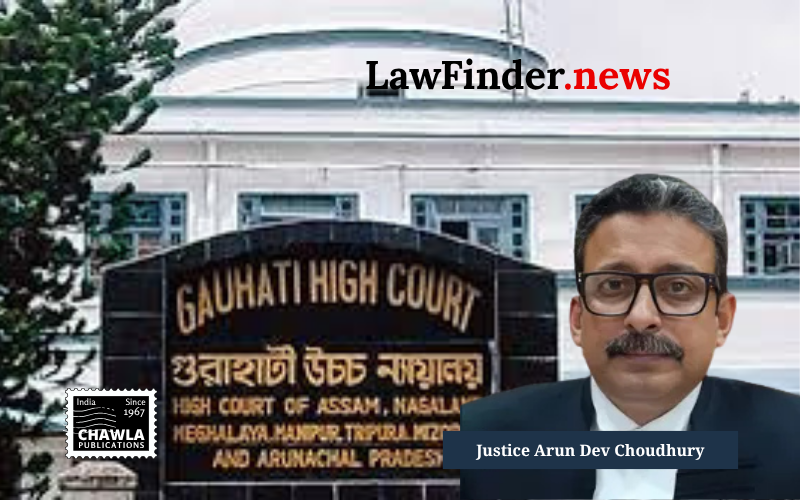
Justice Arun Dev Choudhury, presiding over the case, underscored that discretionary powers under Section 254(2) of Cr.P.C. must be exercised with caution and are not meant for arbitrary use. The High Court observed that the application to call additional witnesses lacked specificity and clear justification, rendering the Additional Sessions Judge's order as an arbitrary exercise of discretion.
The High Court further clarified that while Section 254(2) allows for summoning additional witnesses, it should not be conflated with the provisions under Section 311 of Cr.P.C., which mandates recalling witnesses only if essential for a just decision. The ruling stressed that the Magistrate's discretion should be based on substantive grounds and not on general and vague statements.
In conclusion, the High Court set aside the Additional Sessions Judge's order, reaffirming the trial court's decision. The court also directed the expeditious handling of the case, considering Rahul Gandhi's status as a sitting Member of Parliament, in line with a directive from the Supreme Court.
Bottom Line:
Discretionary power under Section 254(2) of Cr.P.C. must be exercised judiciously and not arbitrarily. The application to summon additional witnesses should provide clear and specific grounds for the necessity of such evidence to ensure a fair trial.
Statutory provision(s): Section 254(2) of Cr.P.C., Section 311 of Cr.P.C., Sections 499 and 500 of the IPC, Section 438/442 read with Section 528 of the Bharatiya Nagarik Suraksha Sanhita, 2023
Rahul Gandhi v. State of Assam, (Gauhati) : Law Finder Doc Id # 2794654