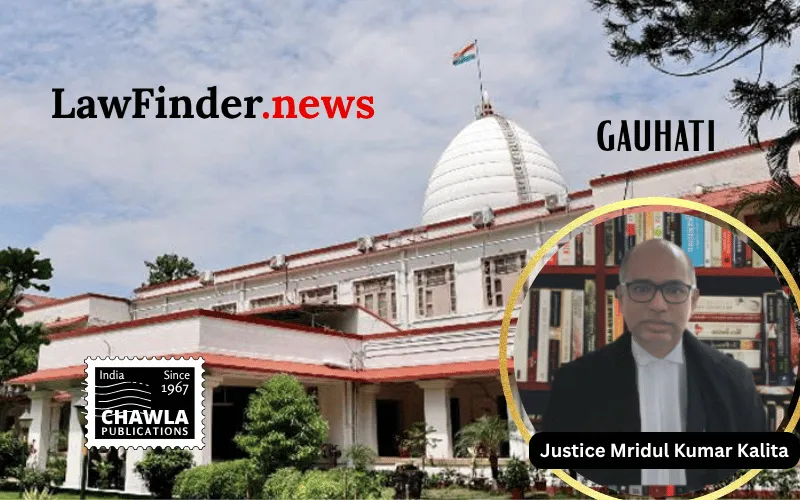
Insurance Company Cannot Evade Compensation by Citing Expired License Without Proving Policy Breach
In a significant judgment, the Gauhati High Court has upheld the liability of Oriental Insurance Co. Ltd. to compensate the claimants in a motor accident case, despite the insurer's contention of a lapsed driving license. The case stems from a tragic accident on April 26, 2013, when Subhash Chandra Yadav was fatally injured by a mini city bus driven rashly, leading to claims filed by his wife, Sushila Devi, and their children.
The insurance company appealed against the Motor Accident Claims Tribunal's decision, arguing that the driver's license had expired, which constituted a breach of policy conditions. However, the High Court, presided over by Justice Mridul Kumar Kalita, ruled that merely citing an expired license is insufficient to absolve the insurer from liability. The court emphasized the necessity for the insurance company to prove that the vehicle's owner was negligent in ensuring the driver had a valid license, a burden the insurer failed to meet.
Justice Kalita referenced the Supreme Court's precedent in National Insurance Co. Ltd. v. Swaran Singh, emphasizing that the insurer must demonstrate the owner's negligence in fulfilling policy conditions. The tribunal had previously determined that the insurer did not provide admissible evidence to establish a fundamental breach. The insurance company's failure to summon the District Transport Officer to verify the license lapse further weakened its case.
The court also addressed the compensation awarded, noting errors in the tribunal's deduction for personal expenses. With seven dependents, the deduction should align with guidelines from the Pranay Sethi case, reducing the personal expenses to one-fifth of the deceased's income. Consequently, the compensation was recalculated, leading to an increased award of Rs. 39,87,730, including adjustments for funeral expenses and loss of consortium.
Additionally, the High Court mandated equal distribution of compensation among the dependents, with minor dependents' shares secured in fixed deposits until maturity. The insurance company is instructed to deposit the revised compensation amount within six weeks for disbursement by the tribunal.
This judgment reinforces the legal standards for insurers contesting liability based on license validity and underscores the judiciary's commitment to fair compensation for victims' families.
Bottom line:-
Motor Accident Claims - Insurance company cannot avoid liability merely on the ground of invalid or lapsed driving license unless it proves breach of policy conditions by the owner and negligence in ensuring adherence to the policy.
Statutory provision(s): Motor Vehicles Act, 1988 Section 166
Oriental Insurance Co. Ltd. v. Mrs. Sushila Devi, (Gauhati) : Law Finder Doc id # 2886403