Supreme Court Upholds High Court's Decision on Motor Accident Compensation, Rejects Deductions of Group Insurance Benefits, Apex Court Affirms that Group Insurance Benefits Cannot Reduce Statutory Compensation under Motor Vehicles Act, 1988
In a landmark judgment, the Supreme Court of India has upheld the Karnataka High Court's decision to disallow deductions of group insurance benefits from the compensation awarded to claimants under the Motor Vehicles Act, 1988. The judgment reinforces the principle that contractual benefits from employer-provided group insurance or other social security schemes cannot be treated as "pecuniary advantages" to be deducted from statutory compensation following a motor accident.
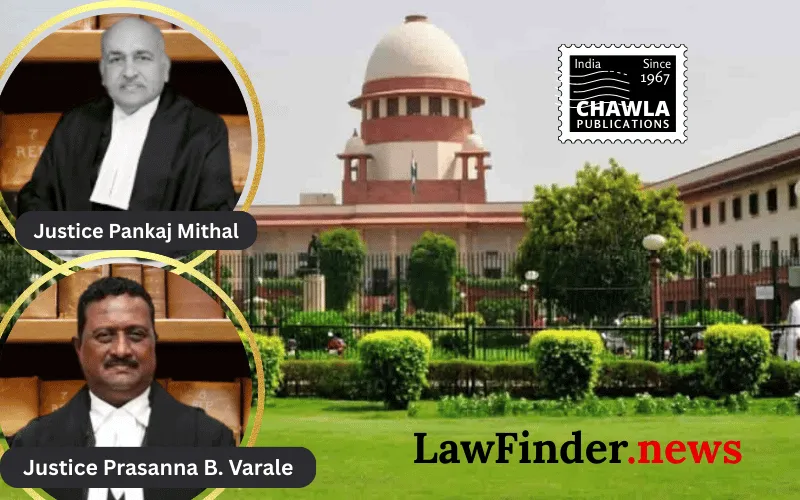
The Supreme Court bench, comprising Justices Pankaj Mithal and Prasanna B. Varale, dismissed appeals filed by the Managing Director of KSRTC, challenging the High Court's orders in two separate civil appeals. Both cases involved tragic accidents where the negligent driving of KSRTC buses resulted in fatalities, prompting the legal representatives of the deceased to seek compensation under Section 166 of the Motor Vehicles Act, 1988.
In the first case, the High Court had set aside a deduction of Rs. 35,48,000 from the compensation awarded by the Motor Accident Claims Tribunal (MACT) in Bengaluru, which was originally granted based on the receipt of group insurance benefits. Similarly, in the second case, the High Court reversed a Rs. 10 lakh deduction made by the tribunal from the awarded compensation.
The Supreme Court, referring to its previous rulings in Helen C. Rebello v. Maharashtra State Road Transport Corporation and United India Insurance Co. Ltd. v. Patricia Jean Mahajan, reiterated that compensation under the Motor Vehicles Act is statutory and independent of any contractual benefits received from an employer. The Court emphasized that such benefits arise from separate contractual relationships and do not have the requisite nexus with compensation for accidental death.
The judgment clarifies that the principle of balancing loss and gain does not apply to diminish the statutory entitlement of claimants to just compensation under the Act. It underscores that the intent of the legislation is to ensure adequate compensation to victims or their dependants without reducing it due to independent benefits derived from other sources.
The Supreme Court's decision has significant implications for future compensation claims under the Motor Vehicles Act, reinforcing the protection of claimants' rights to full statutory compensation irrespective of other benefits received.
The appellants have been directed to comply with the High Court's orders and deposit the full compensation amount, if not already deposited, within six weeks.
Bottom Line:
Group Insurance or contractual benefits received by dependants cannot be deducted from motor accident compensation under the Motor Vehicles Act, 1988, as they arise from independent contractual relationships and lack the requisite nexus with statutory compensation.
Statutory provision(s): Motor Vehicles Act, 1988 Section 166
Managing Director, KSRTC v. P. Chandramouli, (SC) : Law Finder Doc id # 2866883