Court Allows Discharge Application, Citing Lack of Evidence and Absence of Mens Rea
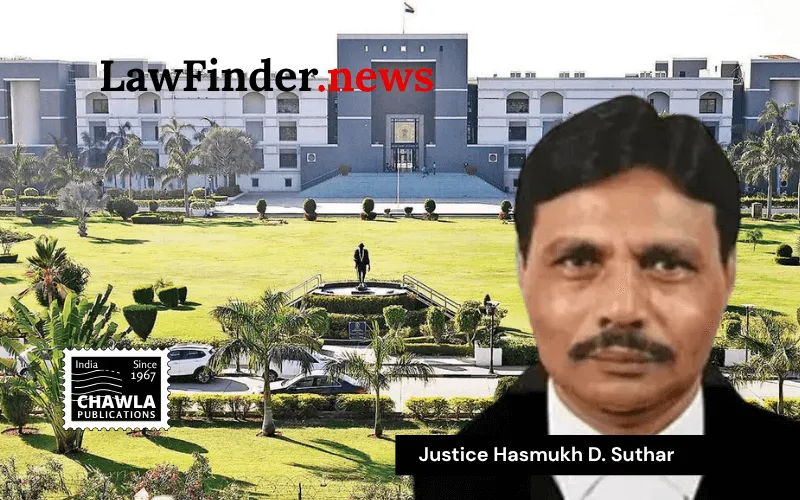
In a significant legal development, the Gujarat High Court has allowed the discharge application filed by Bharatbhai Ghanshyambhai Shah, effectively clearing him of charges related to the structural damage of the Sangemarmar Complex during the 2001 Gujarat earthquake. The judgment, delivered by Justice Hasmukh D. Suthar, underscores the critical role of the discharge mechanism as a judicial filter ensuring fairness and efficiency in criminal trials.
The case revolved around the devastating earthquake on January 26, 2001, which caused severe damage to one wing of the Sangemarmar Complex in Ahmedabad. Bharatbhai Shah was accused under Sections 304 and 120B(1) of the Indian Penal Code, with allegations pointing towards his involvement in the construction activities of the complex.
However, Shah argued that he was merely a financier and had no engagement in the construction activities. He contended that all permissions, payments, and ownership documents were in the name of Mr. Jagdishchandra Gordhandas Sodhan, the builder of the complex. The court found no evidence indicating Shah’s involvement as a builder or developer. Crucially, it noted the absence of mens rea, or criminal intent, which is essential for culpable homicide charges.
The judgment emphasized that the structural damage was a result of a natural calamity and not an act or omission by Shah. The court observed that, even accepting the prosecution's case at face value, there was no material to suggest Shah had knowledge or intention regarding the structural failure. The essential ingredient of mens rea was conspicuously absent, leading to the court's decision to allow the discharge application.
Justice Suthar highlighted the importance of the discharge mechanism in protecting individuals from unnecessary trials when prosecution evidence fails to disclose a prima facie case. This judicial filter not only ensures fairness for the accused but also enhances public confidence in the judicial system by preventing frivolous prosecutions.
In reference to relevant Supreme Court judgments, the court reaffirmed that allegations of negligence should be dealt with under Section 304A IPC rather than the graver charge of culpable homicide unless there is specific evidence of intention or knowledge.
The Gujarat High Court's decision marks a pivotal moment in reinforcing the principles of justice and fairness within the legal system. By quashing the earlier order of the Sessions Court and allowing the discharge application, the court has upheld the constitutional values of personal liberty and judicial efficiency.
Bottom line:-
Discharge mechanism serves as a judicial filter to ensure only cases with legal foundation proceed to trial, upholding fairness for the accused while preserving judicial efficiency.
Statutory provision(s): Section 227 of the Criminal Procedure Code, 1973; Sections 304 and 120B(1) of the Indian Penal Code, 1860.
Bharatbhai Ghanshyambhai Shah v. State of Gujarat, (Gujarat) : Law Finder Doc id # 2897140