Court rules no master-servant relationship exists, dismisses plea for civil servant status and government employee benefits.
In a significant ruling, the Gujarat High Court has dismissed a petition filed by Mamnesh Mahendrabhai Bhavsar and others, physically challenged individuals working on a commission basis at the Civil Hospital in Ahmedabad. The petitioners sought recognition as government employees, regularization of their employment, and the benefits associated with civil servant status.
The petitioners, who have been engaged since 2003 in issuing and maintaining case papers at the Civil Hospital, claimed that they were entitled to benefits as regular employees of the state. They argued that despite their long-term service, they were only receiving a meager commission of Rs. 1 per case paper through an agreement between the Blind People's Association and the State of Gujarat.
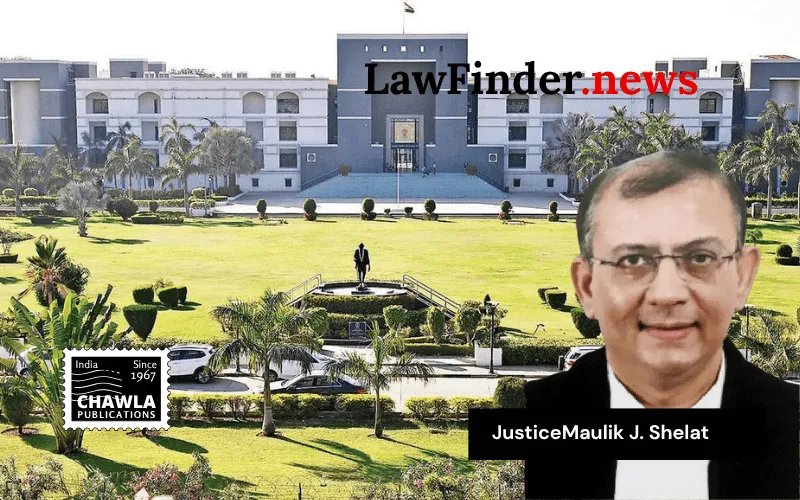
The court, presided over by Mr. Justice Maulik J. Shelat, examined the nature of the petitioners' engagement and found that they were not directly appointed by the state but were instead commissioned through the Blind People's Association. The court concluded that there was no master-servant relationship between the state and the petitioners, noting that the latter were remunerated on a commission basis rather than as salaried employees.
The judgment emphasized that the petitioners' roles did not meet the criteria for regularization under Indian employment law. The court cited the lack of direct appointment through a regular recruitment process against sanctioned posts as a critical factor in its decision. Consequently, the petitioners' plea for regularization, permanency, and parity in pay with regular employees was denied.
The court also referenced previous Supreme Court decisions, reiterating that regularization cannot be granted to employees who were not appointed through a formal recruitment process. The judgment stressed that part-time or commission-based workers are not eligible for regularization or government employee benefits.
The petitioners, represented by Advocate Ms. Muskan A. Gogia, contended that their fundamental rights under Articles 14 and 16 of the Constitution were being violated and that they had a legitimate expectation of being regularized due to their long-standing service. However, the court found these arguments unpersuasive in light of the contractual nature of their engagement.
The Gujarat High Court's decision aligns with established legal principles concerning employment regularization, reinforcing the requirement for a formal recruitment process and the existence of a master-servant relationship to claim civil servant status.
Bottom Line:
Employment Law - Physically challenged petitioners working on commission basis at Civil Hospital, Ahmedabad, under an agreement between the Blind People's Association and the respondent State - No master-servant relationship exists between petitioners and respondent State - Reliefs of regularization, permanency, and benefits as government employees denied.
Statutory provision(s): Articles 14, 16, 21, 226 of the Constitution of India
Mamnesh Mahendrabhai Bhavsar v. State of Gujarat, (Gujarat) : Law Finder Doc id # 2853884