Court rules that prosecution's question during trial did not suggest the desired answer, dismissing objection as unfounded.
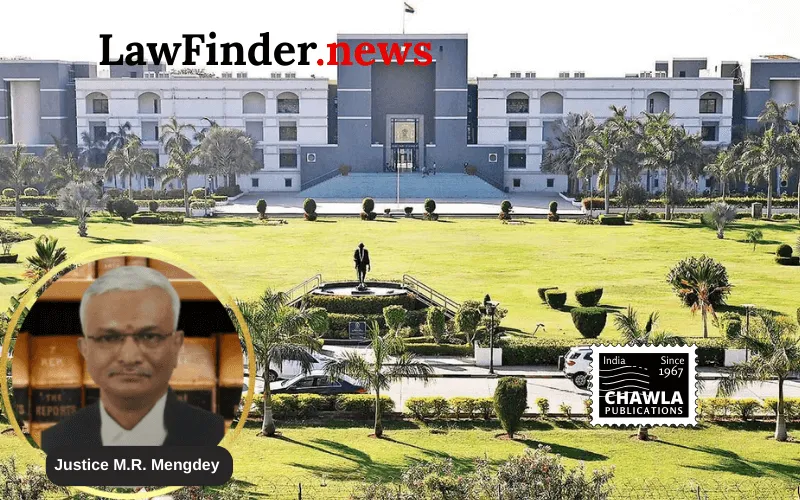
In a recent judgment, the Gujarat High Court dismissed a petition filed by Deep Jayeshbhai Indravadan Soni challenging a trial court's decision regarding an alleged leading question posed by the prosecution during a criminal trial. The case, R/Special Criminal Application (Quashing) No. 4123 of 2026, was presided over by Justice M. R. Mengdey.
The petitioner, Deep Soni, is facing trial in Sessions Case No. 91 of 2024 before the 3rd Additional Sessions Judge, Bharuch, for offences under Sections 354(A) and 376 of the Indian Penal Code, among other charges. During the victim's examination-in-chief, the public prosecutor asked, "What happened thereafter?" to which the victim replied about an encounter with the accused. The prosecution further inquired, "Insisted for what?" when the victim mentioned insistence, leading to her stating it was for physical relations.
The petitioner objected, claiming this constituted a leading question under Sections 141, 142, and 145 of the Indian Evidence Act, 1872, which should not be permitted during examination-in-chief. The trial court, however, deferred the decision on the objection until the case's final disposition, a decision later upheld despite the petitioner's subsequent application for reconsideration.
Justice Mengdey, upon reviewing the case, concluded that the question posed did not suggest a specific answer and therefore did not qualify as a leading question. The court emphasized that a leading question suggests the answer desired by the questioner, a criterion not met in this instance.
Referencing the Supreme Court's guidelines in similar cases, the High Court noted that the prosecution's question did not prompt a specific response nor was it intended to elicit a pre-determined answer from the witness. Justice Mengdey also remarked that the objection appeared to be a tactic to delay the trial, dismissing the petition as lacking merit.
The judgment reinforces the principle that not all questions seeking clarification or further details can be deemed leading, particularly when they do not imply the desired answer. This decision underscores the judiciary's role in ensuring fair trial procedures while preventing undue delay tactics.
Bottom Line:
A question posed by the public prosecutor to the victim during the trial does not qualify as a leading question merely because it seeks clarification or further details from the witness. An objection raised on such grounds must be supported by clear reasoning and cannot be sustained if the question does not prompt or suggest the desired answer.
Statutory provision(s): Indian Evidence Act, 1872 Sections 141, 142, 145; Constitution of India, 1950 Articles 226, 227
Deep Jayeshbhai Indravadan Soni v. State of Gujarat, (Gujarat) : Law Finder Doc id # 2883379