The Court highlights the importance of adhering to statutory and constitutional mandates, emphasizing the Doctrine of Public Trust and Article 14 of the Constitution.
In a significant legal development, the Gujarat High Court has quashed the judgments and decrees of lower courts, dismissing a suit for specific performance involving the sale of public land by the Nagar Seva Sadan, Mangrol. The case, titled "Nagar Seva Sadan Mangrol v. Motivarash Premjibhai Damabhai," revolved around the municipal authority's resolution to alienate public property without adhering to statutory mandates and constitutional principles, such as transparency, fairness, and the Doctrine of Public Trust.
The appellant, Nagar Seva Sadan, challenged the lower courts’ decisions, arguing that the municipal body lacked the jurisdiction to sell public property without compliance with statutory and constitutional safeguards. The case's crux was the General Body's Resolution No. 22, allegedly passed in 1973, which the courts below had upheld. However, the High Court found that this resolution was non est, lacking legal standing due to non-compliance with statutory requirements and government notifications that vest the authority to sell municipal land in the Collector, subject to strict procedural safeguards.
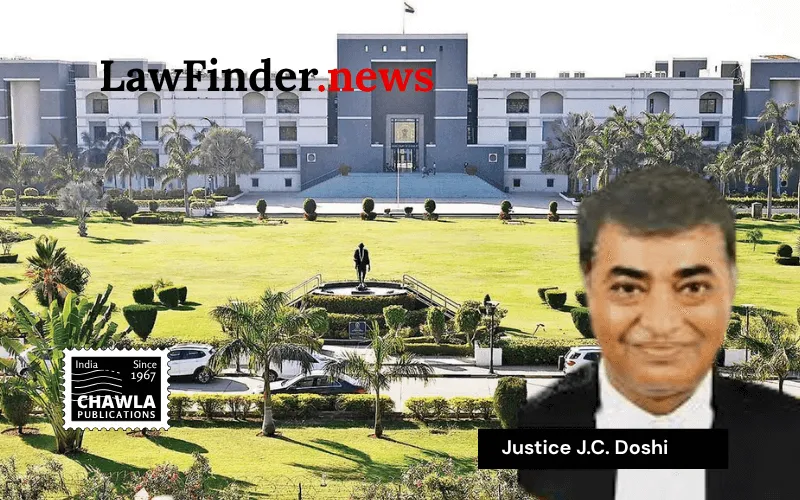
The High Court, presided over by Justice J.C. Doshi, emphasized the necessity for municipal bodies to act as trustees of public resources, in line with the Doctrine of Public Trust and Article 14 of the Constitution, which mandates equality and non-arbitrariness in actions involving public property. The Court underscored that any alienation of public land must be transparent, fair, and equitable, preferably through public auctions or competitive processes.
Furthermore, the Court noted the suit was barred by limitation, as it was filed decades after the alleged cause of action without a proper explanation for the delay. The plaintiff's claim, according to the Court, was untenable both due to the procedural lapse and the failure to address foundational legal principles.
In its detailed judgment, the Court also highlighted the failure of the lower courts to independently analyze the evidence and apply the correct legal standards. This oversight led to erroneous conclusions that warranted interference.
By setting aside the previous judgments, the High Court has reinforced the legal framework that governs the alienation of public properties, ensuring that such actions are always subject to constitutional and statutory oversight.
Bottom Line:
The General Body of a municipal authority does not possess the lawful authority to alienate public land held in trust for public benefit without strict adherence to statutory mandates and constitutional principles including transparency, fairness, and adherence to the Doctrine of Public Trust and Article 14 of the Constitution.
Statutory provision(s): Gujarat Municipalities Act, 1963 Sections 65(2) and 146(1), Doctrine of Public Trust, Article 14 of the Constitution, Limitation Act, 1963 Articles 54 and 58, Civil Procedure Code, 1908 Sections 96, 100, Order XLI Rule 31
Nagar Seva Sadan Mangrol v. Motivarash Premjibhai Damabhai, (Gujarat) : Law Finder Doc id # 2850337