Eleven-year delay in initiating proceedings declared arbitrary; court emphasizes adherence to reasonable timeframes for exercising revisional jurisdiction.
In a landmark judgment, the Gujarat High Court has set aside an order by the Special Secretary (Appeals), Revenue Department, which attempted to exercise suo motu revision powers after an unexplained delay of 11 years. The case, titled Koli Parshottambhai Narsinhbhai v. State of Gujarat, revolved around the contentious exercise of revisional jurisdiction by revenue authorities over land tenure disputes, long after the original mutation entries were recorded.
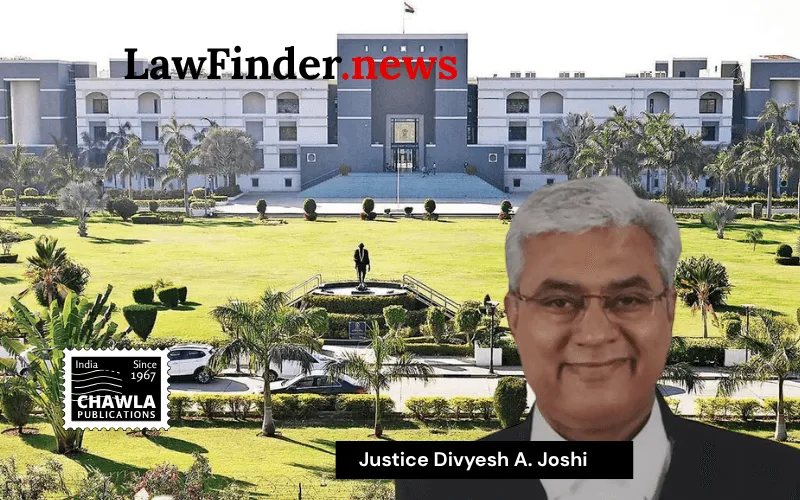
Presided over by Justice Divyesh A. Joshi, the court examined the legality of an order dated May 30, 2012, which had confirmed the forfeiture of land purchased by the petitioners, Koli Parshottambhai Narsinhbhai and another, from the heirs of Raja Bechar in 1990. The petitioners argued that the land, recorded as new tenure by the Assistant Collector in 2003, was originally of old tenure, and the delay in proceedings was both arbitrary and illegal.
Justice Joshi highlighted that the revenue authorities' attempt to annul a sale deed and vest the land in the government without civil court intervention was beyond their statutory powers under Section 79A of the Bombay Land Revenue Code. The court underscored that such powers must be exercised within a reasonable period, citing established legal precedents.
In his detailed judgment, Justice Joshi referred to multiple cases, including Joint Collector Ranga Reddy District v. D. Narsing Rao and State of Gujarat v. Patel Raghav Natha, to reinforce that delayed exercise of revisional powers undermines the rule of law and creates legal uncertainty. The judgment stated that unexplained delays could not justify revisiting settled transactions, especially when third-party rights and significant investments were involved.
The ruling emphasized that the revenue authorities had overstepped their jurisdiction by acting as if they possessed confiscatory powers, which were not conferred by Section 79A. The court also pointed out that entries in revenue records did not explicitly categorize the land as new tenure, thereby invalidating the authorities' claims.
The judgment concluded with a decisive quashing of the impugned order, reiterating that the exercise of suo motu powers must protect established legal rights and not arbitrarily disrupt them. The decision is expected to have far-reaching implications on how revenue authorities in Gujarat handle land tenure disputes and the application of revisional powers.
Bottom Line:
Exercise of suo motu revisional jurisdiction after unreasonable delay is arbitrary, illegal, and opposed to rule of law. The revenue authority cannot annul sale deeds or vest land in the Government without the intervention of a competent civil court.
Statutory provision(s):
Bombay Land Revenue Code, Section 79A
Koli Parshottambhai Narsinhbhai v. State of Gujarat, (Gujarat) : Law Finder Doc id # 2863293