Appellate Court Emphasizes Double Presumption of Innocence and Lack of Credible Evidence
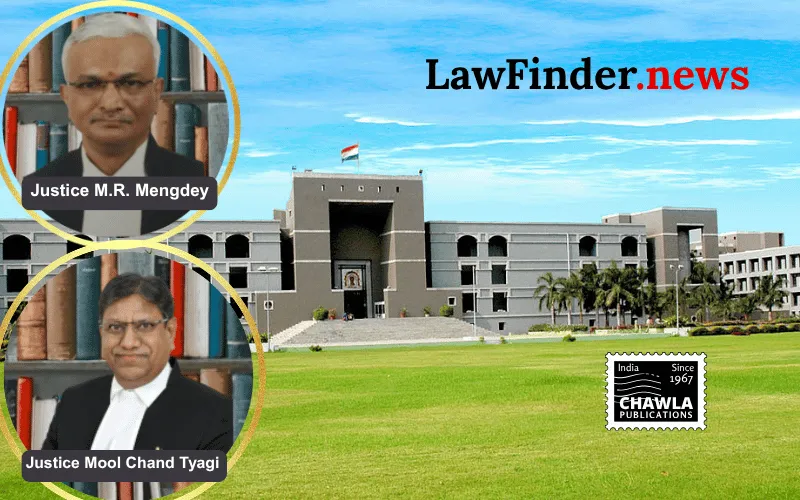
In a significant judgment delivered by the Gujarat High Court, the acquittal of Gulabchand Johrilal Jayswal and others, previously charged with serious offences during the 2002 communal riots in Ahmedabad, has been upheld. The bench, comprising Justices M.R. Mengdey and Mool Chand Tyagi, emphasized the need for compelling evidence before overturning an acquittal, highlighting the double presumption of innocence inherent in criminal jurisprudence.
The case in question stemmed from the 2002 communal riots, specifically an incident on March 12, 2002, near Idga Masjid, Ahmedabad. An unlawful assembly allegedly attacked individuals and property, resulting in the death of a victim who was reportedly set on fire after being doused with kerosene. The trial court had acquitted the accused due to insufficient evidence, a decision now reaffirmed by the appellate court.
During the appeal, the prosecution argued that the trial court failed to adequately consider testimony from key witnesses, including an eyewitness who claimed to have seen the accused committing the crime. However, the High Court noted significant contradictions in this testimony and questioned the credibility and presence of the witness at the crime scene.
The High Court meticulously reviewed both oral and documentary evidence, noting the absence of any incriminating material in the scene's panchnama and the reliance on hearsay by several witnesses. Despite the prosecution's efforts to present a case of manifest error by the trial court, the appellate court found no such illegality or perversity in the original judgment.
This decision underscores the judiciary's cautious approach in interfering with acquittals, particularly in cases where the evidence does not conclusively prove guilt beyond a reasonable doubt. The court cited the Supreme Court's principles from the Chandrappa v. State of Karnataka case, reinforcing the notion that an appellate court should not lightly disturb acquittal findings unless manifest errors are evident.
The dismissal of the appeal reaffirms the trial court's judgment from April 7, 2003, maintaining the acquittal of the accused and discharging their bail bonds. The judgment serves as a reminder of the rigorous standards of proof required in criminal cases and the judiciary's commitment to uphold the rule of law.
Bottom Line:
Acquittal in a criminal case - Appellate Court should not interfere with an acquittal unless there is manifest illegality in the trial court's approach or the conclusion is perverse.
Statutory provision(s): Criminal Procedure Code, 1973 - Section 378, Indian Penal Code, 1860 - Sections 143, 147, 148, 149, 188, 323, 302, Bombay Police Act - Section 135(1).
State of Gujarat v. Gulabchand Johrilal Jayswal, (Gujarat)(DB) : Law Finder Doc id # 2857683