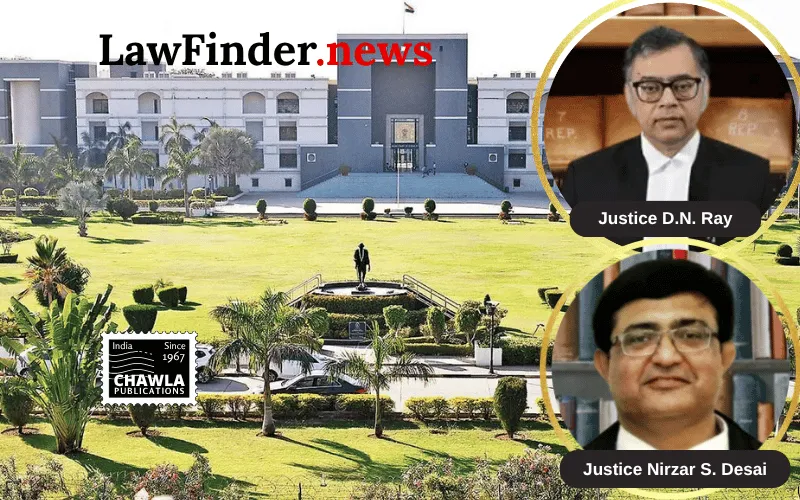
Court emphasizes on the presumption of innocence and finds no perversity in trial court's judgment
In a significant judgment, the Gujarat High Court has upheld the acquittal of Fillipbhai Magalbhai Mistry and others involved in a mob violence case connected to the communal disturbances following the Godhra train burning incident in 2002. The bench, comprising Justices Nirzar S. Desai and D.N. Ray, ruled that the findings of the trial court were neither perverse nor manifestly erroneous, thus reaffirming the principle that an appellate court should not interfere with acquittals unless the trial court's findings are demonstrably unsustainable.
The case stemmed from the violent events on February 28, 2002, where the accused were alleged to have formed an unlawful assembly intending to murder Samsuddin @ Kasamkhan and set ablaze Muslim residential colonies and shops in Vadodara. Despite the gravity of the allegations, the trial court acquitted the accused due to inconsistent witness testimonies and the lack of conclusive evidence linking them to the specific acts of violence.
The State of Gujarat challenged this acquittal under Section 378 of the Criminal Procedure Code, arguing that the trial court had erred in its judgment. However, the High Court, after thorough examination of the evidence and arguments presented, found no grounds to overturn the acquittal. The court underscored the necessity for appellate courts to respect the credibility determinations of trial courts and the presumption of innocence in favor of the accused.
The judgment meticulously analyzed the evidence, including eyewitness accounts and medical reports, which failed to conclusively establish the identity of the perpetrators due to the chaotic nature of the mob violence. Notably, the court observed that the complainant's testimony lacked specificity regarding the accused's involvement in the crime, and the medical evidence did not sufficiently corroborate the prosecution's narrative.
The High Court's decision is consistent with established legal principles that caution against overturning acquittals based solely on differing interpretations of evidence. The judgment cited precedents from the Supreme Court, reinforcing the idea that appellate intervention is warranted only when the trial court's view is unreasonable or implausible.
This case serves as a reminder of the high threshold for overturning acquittals, especially in complex cases with multifaceted evidence. The verdict has been welcomed by legal experts as an affirmation of the judiciary's role in safeguarding the rights of individuals against wrongful convictions.
Bottom line:-
Acquittal Appeal - High Court cannot reverse acquittal unless trial court's findings are perverse, contrary to evidence, palpably wrong, manifestly erroneous, or demonstrably unsustainable.
Statutory provision(s): Indian Penal Code, Sections 143, 147, 436, 302, 108; Criminal Procedure Code, 1973, Section 378
State of Gujarat v. Fillipbhai Magalbhai Mistry, (Gujarat)(DB) : Law Finder Doc id # 2892417