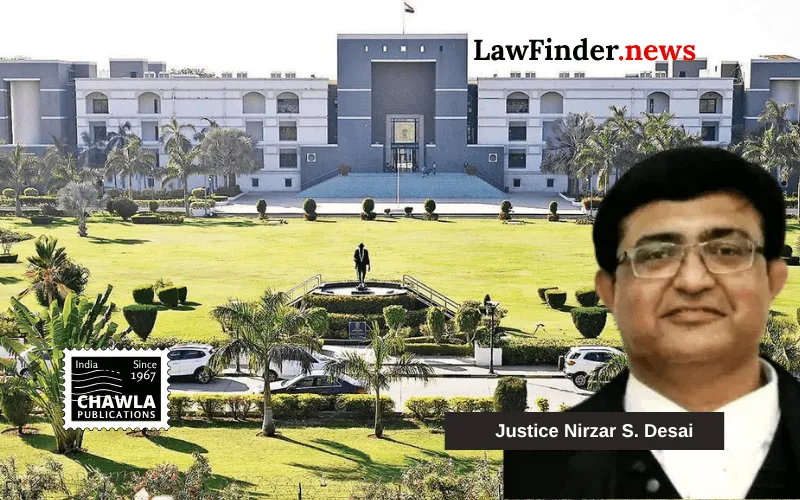
Court Directs Granting of Licenses to Students Affected by Interim Orders, Imposes Costs on Universities
In a landmark ruling, the Gujarat High Court has delivered a significant judgment favoring students of homeopathy colleges who found themselves in the crosshairs of a regulatory dispute between educational institutions and the Ministry of AYUSH. The court's decision, dated February 4, 2026, stems from a series of petitions filed by Parul University and others against the Union of India, challenging the denial of extension of approval for their homeopathy courses for the academic year 2016-17.
The crux of the dispute involved the interpretation of Section 12A of the Homeopathy Central Council Act, 1973. The Ministry of AYUSH had refused to extend approval to existing homeopathy courses, despite favorable inspection reports from the Central Council of Homeopathy. The Ministry contended that it had the authority to withhold such approvals under the said section, a claim that the petitioners argued was beyond the Ministry’s scope when dealing with already established courses.
Presiding over the case, Justice Nirzar S. Desai ruled that the Ministry of AYUSH exceeded its jurisdiction by denying the extension of approval for the existing courses, especially when the Central Council's inspections were favorable. The court emphasized that Section 12A did not empower the Ministry to refuse extensions for ongoing courses, thereby granting interim relief allowing colleges to admit students on a provisional basis.
The court's decision was heavily influenced by the potential adverse impact on students who had completed their courses under interim orders. Recognizing the students' predicament, the court ordered the Ministry to issue Letters of Permission (LOP) and licenses necessary for practice, thereby validating the students' degrees. This move aims to protect students from becoming collateral damage in the regulatory tussle, ensuring their educational qualifications remain recognized.
Justice Desai also criticized the universities for not including affected students as parties to the petitions, noting that their interests were directly at stake. Consequently, the court imposed a cost of Rs. 25,000 on each petitioner university, directing the amount to be paid to the High Court Legal Services Committee.
The judgment has been hailed as a victory for student rights, emphasizing the judiciary's role in safeguarding educational interests against bureaucratic overreach. The court's directive ensures that students, who had pursued their education with legitimate expectations, are not left in limbo due to administrative disputes.
The case has drawn attention to the ongoing legislative developments concerning the Homeopathy Central Council Act, with proposed amendments seeking to clarify the regulatory framework for homeopathy education. The judgment, while resolving the immediate issue, leaves open the broader legal questions for future consideration.
Bottom Line:
Homeopathy Central Council Act, 1973 - Extension of approval for existing Homeopathy Colleges and validation of students' degrees - Relief granted to protect interests of students who completed their courses under interim orders.
Statutory provision(s): Homeopathy Central Council Act, 1973 Section 12A
Parul University v. Union Of India, (Gujarat) : Law Finder Doc id # 2853413