Litigant's Blame on Advocate Insufficient Without Evidence; Duty to Remain Vigilant Emphasized
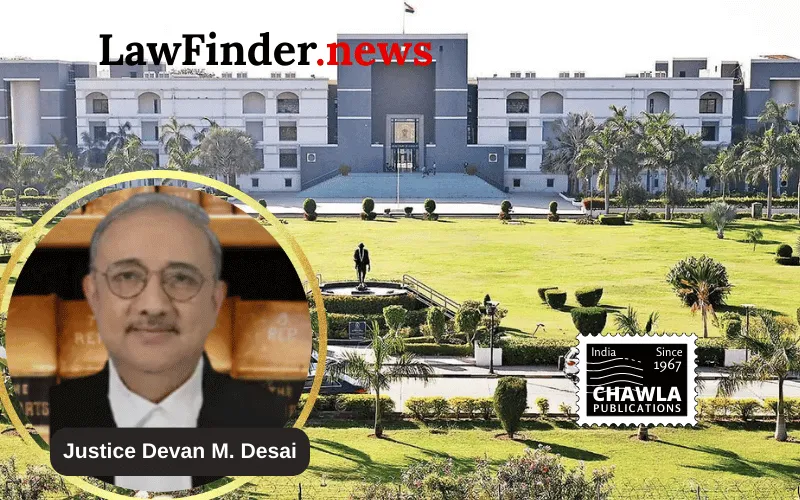
In a significant ruling, the Gujarat High Court has dismissed a petition seeking the condonation of delay in restoring a civil suit, reinforcing the principle that litigants must exercise vigilance in legal proceedings. The court, presided over by Justice Devan M. Desai, upheld the trial court's decision to reject the application filed by the legal representatives of Sardar Himmatbhai Khokar, who sought to restore a civil suit dismissed for non-appearance.
The petitioners filed Regular Civil Suit No. 794 of 2002 for the cancellation of a sale deed, which was dismissed due to their absence in court proceedings. Subsequently, they sought to condone a delay of 14 months and 15 days in filing for restoration, attributing the delay to the alleged negligence of their advocate. The trial court had earlier dismissed this application, prompting the current petition.
Justice Desai emphasized that litigants bear a duty to remain informed about their cases and cannot simply attribute delays to their legal representatives without substantial evidence. The judgment highlighted that the petitioners failed to disclose the exact date and source of their knowledge about the suit's dismissal, undermining their argument for condonation.
The court noted that modern technological advancements, such as online access to court orders, negate excuses of ignorance. The petitioners had been granted multiple adjournments, yet they failed to take necessary actions to proceed with their case. The court found no merit in the petitioners' claims and dismissed the appeal, reinforcing the trial court's findings.
The judgment referenced several precedents, including the Supreme Court's ruling in "Salil Dutta v. T.M. & M.C. Private Ltd.," which underscores that litigants cannot disown their advocates' actions without evidence of being an innocent party. The court expressed concern over the practice of advocates filing affidavits to excuse client negligence, stressing that such affidavits should be rare and not used routinely to condone delays.
The court's decision serves as a reminder of the importance of litigant vigilance and the limitations of attributing procedural failures solely to legal representatives.
Bottom Line:
Condonation of delay in restoration application under Order 9, Rule 13 of CPC - Litigant blaming advocate for non-appearance and lack of communication regarding dismissal of suit - Held, litigant must remain vigilant about judicial proceedings; mere blaming advocate without evidence is insufficient to condone delay.
Statutory provision(s):
- Order 9, Rule 13 of the Civil Procedure Code, 1908
- Section 5 of the Limitation Act, 1963
- Articles 226 and 227 of the Constitution of India, 1950