Court Dismisses Appeal by Electricity Supplier Due to Lack of Sufficient Evidence
In a significant judgment, the Gujarat High Court has upheld the decision of the Additional Civil Judge (SD), Gondal, dismissing the appeal filed by the Executive Engineer of the erstwhile Gujarat Electricity Board, now Pashchim Gujarat Vij Company Ltd. The case revolved around allegations of electricity theft by Mulraj Ice Factory, where the supplier claimed tampering with the electric meter.
The initial suit was filed by the respondents, challenging the issuance of a supplementary bill amounting to Rs. 10,07,976.80, which was issued after an initial bill of Rs. 2,17,857.58 was cancelled. The respondents sought the cancellation of these bills, arguing that they were false and arbitrary.
The defendants, representing the electricity supplier, contended that a laboratory report indicated the possibility of inserting a plastic strip into the meter, suggesting tampering. However, the trial court found that there was no direct evidence or credible witness testimony to substantiate these claims. The burden of proof, which lay on the supplier, was not met satisfactorily.
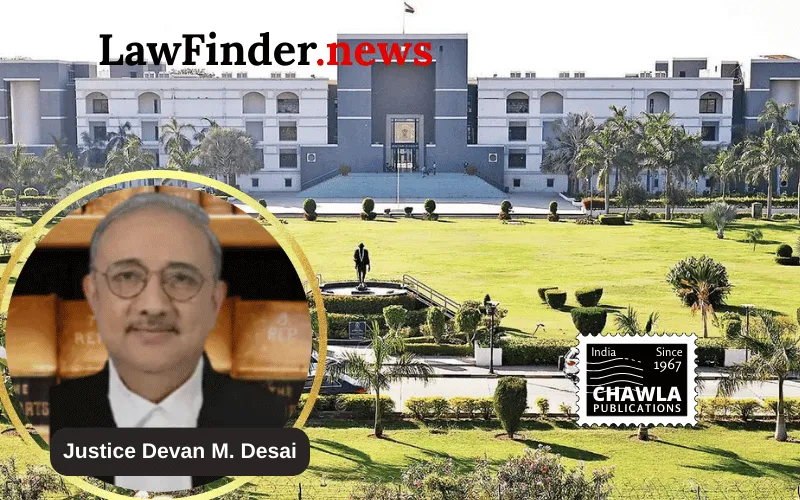
In the appeal, the supplier reiterated their claims, emphasizing the laboratory report and the assertion that the plaintiff was involved in dishonest energy consumption. However, the High Court, presided over by Justice Devan M. Desai, noted the lack of direct evidence and witness testimony to support the allegations. The court emphasized that the responsibility to prove dishonest use of electricity rests firmly on the supplier.
The High Court pointed out that the laboratory report was insufficient as it only suggested a possibility of tampering without concrete proof. Furthermore, the court noted that the defendants failed to provide any compelling explanation for issuing the supplementary bill or amending their written statement to justify the revised charges.
In dismissing the appeal, the High Court underscored the importance of substantial evidence in cases involving allegations of electricity theft, concluding that the trial court's decision to cancel the supplementary bill was justified. The court emphasized that such observations were specific to the case at hand and should not be considered a precedent.
The judgment reinforces the principle that electricity suppliers must provide robust evidence when alleging theft or dishonest use of energy, ensuring that consumers are not unfairly penalized without due process and proof.
Bottom Line:
Civil Suit - Electricity Bill Dispute - Burden of proof lies on the electricity supplier to prove allegations of dishonest use of electricity or theft of energy - Absence of concrete evidence, such as proper laboratory report and witness testimony, renders the claim of theft unsubstantiated.
Statutory provision(s): Civil Procedure Code, 1908 Section 96, Electricity Act, 2003 Section 33B