Appellant's inconsistent narratives and nine-year delay in filing petition lead to denial of relief in Kashmir University Gold Medal case.
In a recent judgment, the Jammu and Kashmir High Court dismissed an appeal by Ibrar Bashir Shirazi against the University of Kashmir, seeking the conferment of a Gold Medal. The appeal was rejected primarily on the grounds of "delay and laches" and the appellant's inconsistent accounts of the events that transpired.
The appellant, Ibrar Bashir Shirazi, had approached the court to command the University of Kashmir to award him a Gold Medal, which he claimed had been assured to him in 2014. According to Shirazi, the University initially awarded him the medal due to his first position in merit but later retrieved it, promising to return it once additional medals were procured.
The University, however, contested this claim, asserting that their statutes did not provide for Gold Medals at the postgraduate level for Shirazi's discipline. They further raised a preliminary objection on the grounds of delay, highlighting that the cause of action arose in 2014, but the writ petition was filed only in 2023.
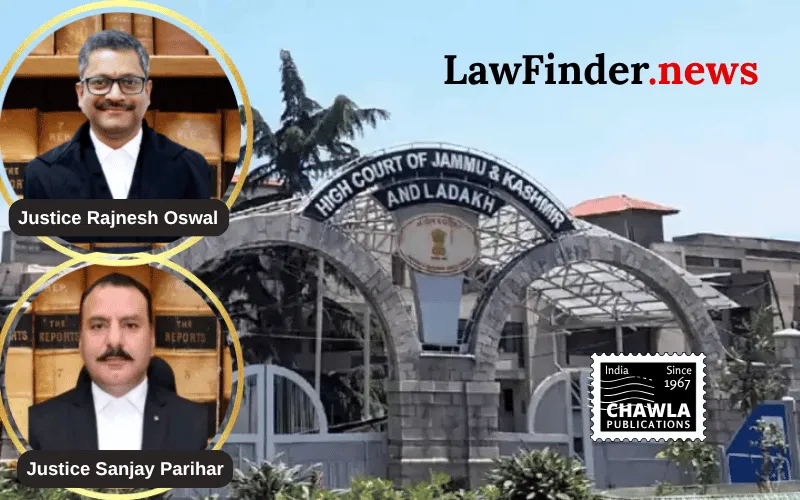
The court, presided over by Justices Rajnesh Oswal and Sanjay Parihar, noted Shirazi's vacillating and inconsistent stands throughout the litigation process, which demonstrated uncertainty regarding his own case. The judgment emphasized that the appellant's narrative changed significantly between different submissions, undermining the credibility of his claim.
Drawing on precedents from the Supreme Court, including judgments in HMT Ltd. v. Smt. Rukmini and others, Syed Maqbool Ali v. State of Uttar Pradesh, and State of Maharashtra v. Digambar, the court reiterated that relief under Article 226 of the Constitution is not granted in cases of gross delay and laches, especially when the litigant's conduct is questionable.
The court concluded that Shirazi's appeal was without merit due to the extensive delay in filing and his inconsistent stories. The court held that administrative inertia could not justify the nine-year delay in seeking legal redress, especially when the appellant's own stance revealed uncertainty about the facts.
This decision underscores the importance of timely and consistent pursuit of legal remedies, highlighting that courts require aggrieved parties to act diligently and provide satisfactory explanations for any delays.
Bottom line:-
Doctrine of delay and laches - Relief denied to appellant due to vacillating and inconsistent stands in litigation, coupled with a significant delay in approaching the court.
Statutory provision(s): Article 226 of the Constitution of India