Court Declines to Intervene in Dismissal Despite Alleged Procedural Flaws, Emphasizes Discretionary Jurisdiction and Equitable Considerations
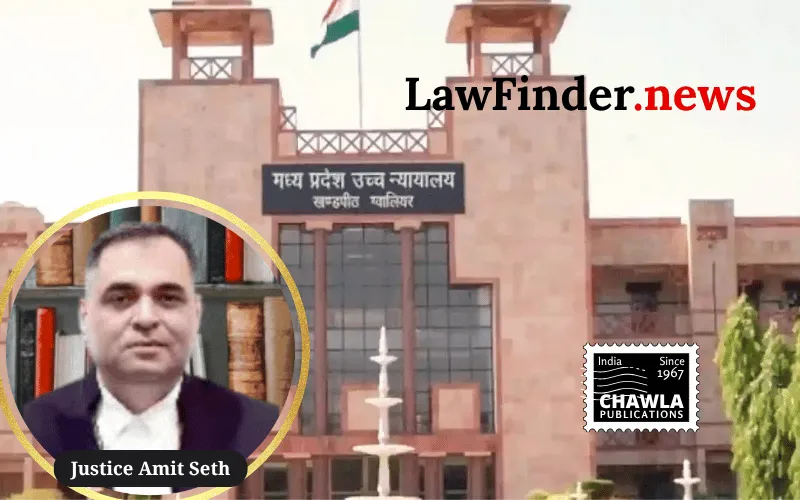
In a significant judgment, the Madhya Pradesh High Court, presided over by Justice Amit Seth, has decided not to interfere in the termination of Azam Sher Khan, a Guest Faculty member at the Government Women Polytechnic College, Gwalior. The decision, delivered on May 15, 2026, comes in response to allegations that Khan sent objectionable messages to a female student.
Azam Sher Khan filed a writ petition under Article 226 of the Indian Constitution, challenging the termination order dated April 8, 2025. He argued that the order was passed without adhering to the principles of natural justice and without the necessary sanctions from the competent authority as per the prescribed procedure.
The court acknowledged that the allegations against Khan involved serious misconduct due to the nature of his role as a teacher in a women's college. Despite Khan's representation admitting guilt and offering an apology, his legal counsel argued that the termination was stigmatic and adversely impacted his career.
Justice Amit Seth, referencing the Supreme Court's judgment in M.S. Sanjay vs. Indian Bank, highlighted the discretionary nature of the High Court's jurisdiction under Article 226. The court emphasized that even if an order is deemed illegal or invalid, it can choose not to intervene if equitable considerations warrant such a decision.
The judgment underscored that the termination findings were limited to the current employment scenario and would not affect Khan's future job prospects. The court ensured that any future applications by Khan for employment, including positions as Guest Faculty, would be considered independently of the termination order.
This decision reflects the court's approach to balancing legal frameworks with equitable considerations, ensuring that justice is served in a broader context. The judgment serves as a reminder of the discretionary power courts hold in administering substantial justice, even when procedural lapses are evident.
Bottom line:-
Termination of Guest Faculty due to allegations of sending objectionable messages to a girl student. Court emphasized that jurisdiction under Article 226 is discretionary, and equitable considerations play a key role in exercising such jurisdiction.
Statutory provision(s): Article 226 of the Constitution of India, Principles of Natural Justice
Azam Sher Khan v. State of Madhya Pradesh, (Madhya Pradesh)(Gwalior) : Law Finder Doc id # 2902688