Madhya Pradesh High Court dismisses writ petition challenging termination for selling prohibited items on school premises
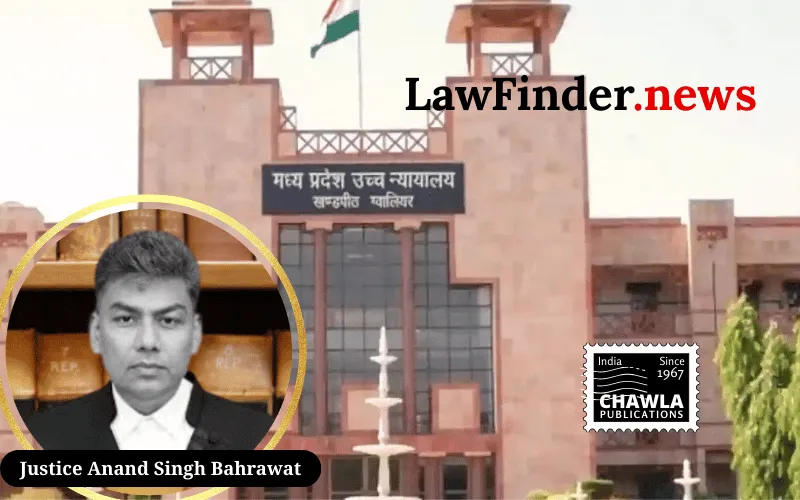
The Madhya Pradesh High Court, in a significant ruling, dismissed the writ petition filed by Prayagnarayan, a former Peon at Scindia School, Fort Gwalior. The court upheld the decision of the Labour Court, which had earlier sustained the termination of Prayagnarayan’s services on charges of selling prohibited items, including tobacco and related products, within the school premises.
The decision, rendered by Justice Anand Singh Bahrawat, emphasized the limited scope of interference under Article 227 of the Indian Constitution, underscoring that the High Court cannot reappreciate evidence or correct mere errors of fact or law unless there is a serious jurisdictional error or an error apparent on record. This principle was pivotal in affirming the Labour Court's findings, which were deemed well-reasoned and based on substantial evidence.
In the proceedings, Prayagnarayan contended that the termination was unjust, alleging procedural lapses during the inquiry, including the non-provision of certain documents and the appointment of a biased inquiry officer. However, the court found that the inquiry was conducted in accordance with the school’s service rules and that the petitioner had admitted to the charges in his reply to the charge sheet. The court noted that sufficient opportunity was provided to Prayagnarayan to defend himself, dismissing claims of procedural injustice.
The judgment also referenced several Supreme Court precedents emphasizing the restrained exercise of Article 227 powers by High Courts, reinforcing that such intervention is warranted only in instances of grave legal errors or jurisdictional overreach. The court highlighted that domestic inquiries are distinct from civil or criminal proceedings and are governed by specific service rules that were adhered to in this case.
This ruling reiterates the judiciary's stance on maintaining the sanctity of disciplinary proceedings conducted as per established service rules and underscores the importance of adhering to procedural fairness while upholding the rule of law.
Bottom Line:
Scope of interference by High Court under Article 227 of the Constitution of India is limited to ensuring that subordinate courts or quasi-judicial tribunals act within their jurisdiction and follow well-established principles of law. The High Court cannot act as an appellate court or reappreciate evidence unless there is a serious error of law or error apparent on record.
Statutory provision(s): Article 226 of the Constitution of India, Article 227 of the Constitution of India