Allahabad High Court dismisses appeals, emphasizing the limited scope of rectification under Income Tax Act for mistakes apparent from the record.
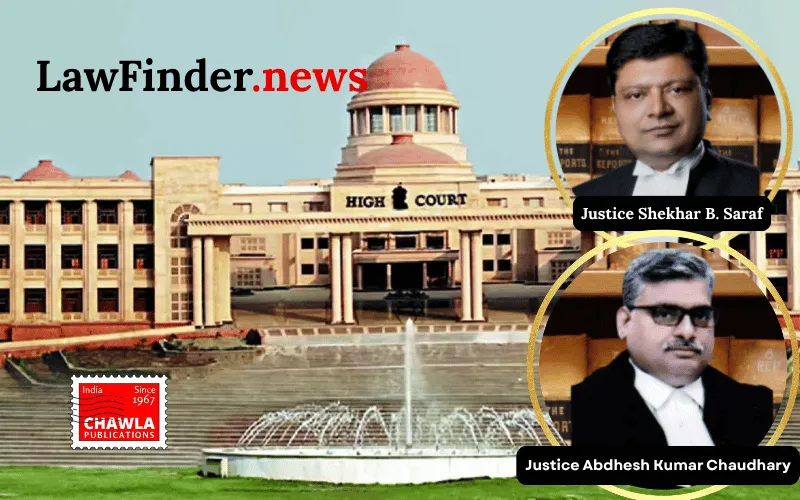
In a significant judgment, the Allahabad High Court has dismissed the appeals filed by Abusaad Ahmad challenging the Income Tax Appellate Tribunal's (ITAT) rejection of his rectification applications under Section 254(2) of the Income Tax Act, 1961. The division bench, comprising Justice Shekhar B. Saraf and Justice Abdhesh Kumar Chaudhary, upheld the Tribunal's decision, reiterating the narrow scope of rectification applications, which are confined to rectifying apparent mistakes on the record.
The case revolved around the Tribunal's dismissal of statutory appeals filed by Ahmad due to a delay of 867 days. The delay was attributed to the negligence of Ahmad's driver, who allegedly failed to inform him about the receipt of the Commissioner of Income Tax (Appeals) order. Despite an affidavit submitted by the driver, the Tribunal found the explanation insufficient and dismissed the appeals.
Ahmad filed miscellaneous applications under Section 254(2) for rectification, arguing that the Tribunal erred in not considering the affidavit and failing to exercise its investigative powers under Sections 131 and 255(6) of the Act. However, the Tribunal maintained that there was no mistake apparent on the face of the record and dismissed the applications.
The High Court, while hearing the appeals, emphasized that Section 254(2) is intended for rectifying mistakes that are glaring and obvious. The Court highlighted that debatable issues or those requiring elaborate argumentation cannot be rectified under this provision. The judgment cited several precedents, including the Supreme Court's rulings in Master Construction Co. (P) Ltd. v. State of Orissa and Satyanarayan Laxminarayan Hegde v. Mallikarjun Bhavanappa Tirumale, to reinforce this interpretation.
Additionally, the High Court noted that the appellant had not challenged the main Tribunal order dated 03.07.2024, which dismissed the statutory appeals on the ground of delay. The appeals before the High Court were limited to the dismissal of the rectification applications.
The Court concluded that the Tribunal's decision did not exhibit any mistake apparent from the record and that the matters raised were inherently debatable, thus outside the purview of Section 254(2). It also observed that the High Court's role under Section 260A is limited to addressing substantial questions of law, not factual determinations unless there is evidence of perversity or procedural irregularity.
The dismissal of the appeals underscores the judiciary's stance on maintaining the integrity of procedural timelines and the restricted application of rectification powers, safeguarding the finality of Tribunal decisions in tax matters.
Bottom line:-
Income Tax Act, 1961 - Section 254(2) - Scope of rectification application under Section 254(2) is narrow and limited to mistakes apparent on the record. Debatable points or errors requiring elaborate arguments cannot be rectified under this section.
Statutory provision(s):
Income Tax Act, 1961 - Sections 254(2), 131, 255(6), 260A