Supreme Court Overturns High Court's Quashing of Cheque Bounce Case Apex Court emphasizes trial necessity in Section 138 complaints, stresses presumption under Section 139
In a significant judgment, the Supreme Court of India has overturned the Patna High Court's decision to quash proceedings under Section 138 of the Negotiable Instruments Act, 1881. The apex court highlighted the importance of presumption under Section 139 and the necessity for such matters to be determined during trial, not pre-trial.
The case, titled "M/s Sri Om Sales v. Abhay Kumar @ Abhay Patel," revolved around a complaint lodged by M/s Sri Om Sales against Abhay Kumar for allegedly issuing a cheque worth Rs. 20,00,000 as payment for goods delivered, which was subsequently dishonored due to insufficient funds. Following the dishonor, a legal notice was sent, and upon non-payment, a complaint was filed.
The magistrate took cognizance of the complaint and summoned the respondent, Abhay Kumar, under Section 138. However, Kumar challenged the summoning order in the High Court, which led to the quashing of the entire criminal proceedings based on the assertion that the cheque was not issued for discharging any debt or liability.
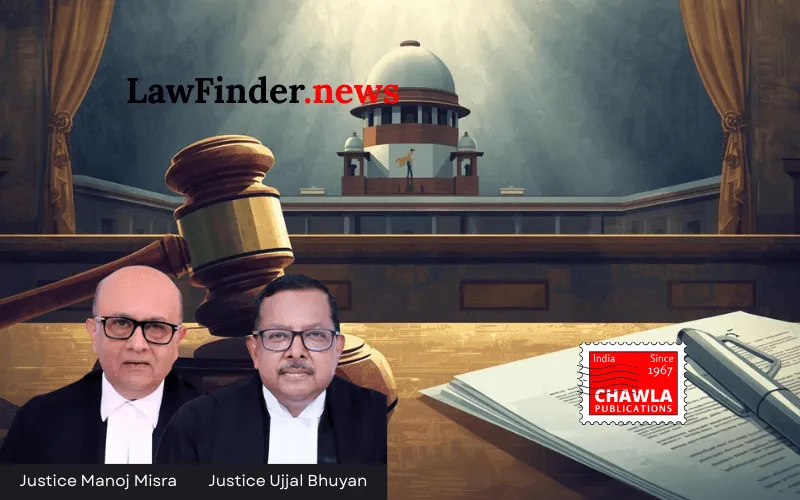
The Supreme Court, in its judgment delivered by Justices Manoj Misra and Ujjal Bhuyan, emphasized that the High Court erred by conducting a detailed inquiry into the factual disputes at the pre-trial stage. The apex court clarified that under Section 139, there is a statutory presumption that the holder of a cheque received it for discharging debt or liability, which can only be rebutted during the trial.
The court further noted that the High Court's exercise of jurisdiction under Section 482 of the Criminal Procedure Code was unwarranted, as the complaint had prima facie disclosed the necessary ingredients for the offense under Section 138. It reiterated that such presumption is rebuttable only with evidence during the trial.
Citing precedents like Maruti Udyog Ltd. v. Narender and Rangappa v. Sri Mohan, the Supreme Court underscored that courts should be cautious in quashing complaints at the pre-trial stage, particularly when a legal presumption is involved. The judgment also referenced Rajeshbhai Muljibhai Patel v. State of Gujarat and Rathish Babu Unnikrishnan v. State (NCT of Delhi), reinforcing the position that disputes regarding the purpose of cheque issuance should be resolved at trial.
In conclusion, the Supreme Court allowed the appeal, restoring the criminal complaint to the magistrate's file for trial, while making it clear that the trial court should decide the issue independently, uninfluenced by previous observations. The decision underscores the judiciary's approach to ensuring thorough examination and fair trial in cases involving negotiable instruments.
Bottom Line:
High Court cannot quash a complaint under Section 138 of the Negotiable Instruments Act, 1881 at the pre-trial stage by conducting a roving enquiry into whether the cheque was issued for discharge of any debt or liability, as such issues are to be decided during the trial.
Statutory provision(s): Section 138, Section 139 of the Negotiable Instruments Act, 1881; Section 482 of the Criminal Procedure Code, 1973
M/s Sri Om Sales v. Abhay Kumar @ Abhay Patel, (SC) : Law Finder Doc Id # 2824202