Supreme Court Overrules Madras High Court's Use of Supervisory Powers to Strike Off Plaint, High Court's decision to invoke Article 227 instead of Order VII Rule 11 of CPC criticized; Supreme Court emphasizes adherence to statutory remedies.
In a significant ruling, the Supreme Court of India has overturned a decision by the Madras High Court, which had exercised its supervisory powers under Article 227 of the Constitution to strike off a plaint. The case, P. Suresh v. D. Kalaivani & Ors., revolved around a property dispute where the High Court had struck off the plaint in Original Suit No. 93 of 2020, citing fraudulent grounds. However, the Supreme Court has now clarified the correct application of legal provisions and reinforced the importance of adhering to statutory remedies.
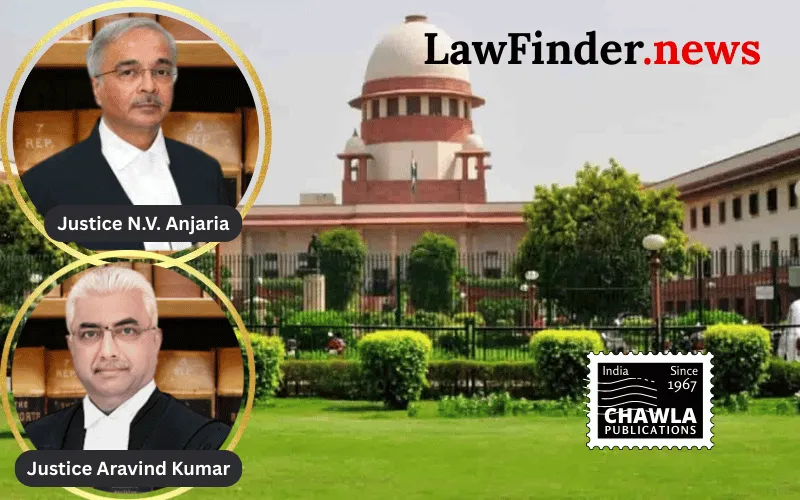
The bench, comprising Justices N.V. Anjaria and Aravind Kumar, emphasized that the supervisory jurisdiction under Article 227 should not be used to circumvent specific statutory provisions like Order VII Rule 11 of the Civil Procedure Code (CPC), 1908, which provides for the rejection of a plaint under specific circumstances. The Court stressed that the powers under Article 227 are to be exercised sparingly and are not intended to replace statutory remedies.
The appellant, P. Suresh, had challenged the High Court's decision, arguing that the High Court erred in using its supervisory powers when an alternative remedy under Order VII Rule 11 of CPC was available to the defendants. The Supreme Court concurred, stating that such jurisdiction should be used only in exceptional cases, especially when a statutory remedy exists.
The Court further elaborated on the distinction between Order VI Rule 16 and Order VII Rule 11 of CPC, noting that while the former deals with striking out parts of pleadings that are unnecessary or scandalous, the latter specifically addresses the grounds for rejecting a plaint. The High Court's reliance on Article 227 instead of directing the parties to the appropriate provisions under CPC was deemed an error.
The Supreme Court's judgment has restored the original suit, directing the parties to appear before the trial court for further proceedings. The defendants have been granted the liberty to file an application under Order VII Rule 11 of CPC, which the trial court will consider according to the law.
This ruling reaffirms the principle that statutory remedies must be exhausted before seeking extraordinary relief under the Constitution, thereby maintaining the integrity and orderly functioning of the judicial process.
Bottom Line:
High Court cannot exercise supervisory jurisdiction under Article 227 of the Constitution to strike off the plaint when specific provisions like Order VII Rule 11 of the Civil Procedure Code, 1908, exist for such relief.
Statutory provision(s): Article 227 of the Constitution of India, Order VI Rule 16 of CPC, Order VII Rule 11 of CPC, Civil Procedure Code, 1908.