The court emphasizes the importance of honesty in litigation, denying relief to a plaintiff who suppressed material facts and made false statements.
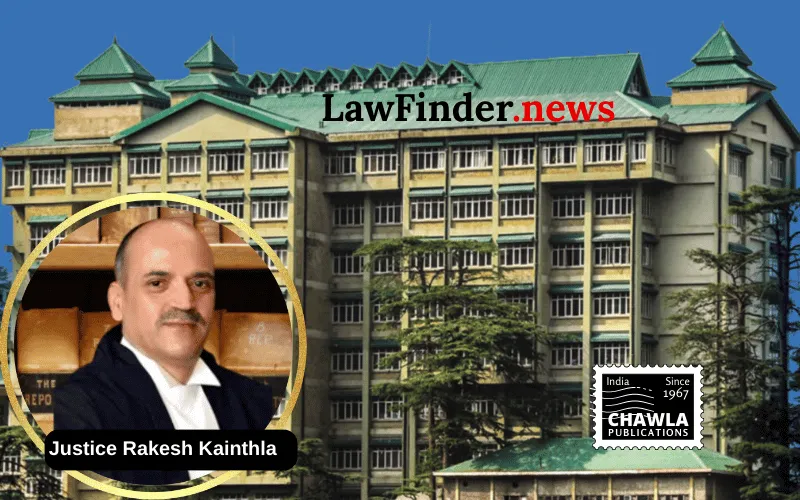
In a notable judgment, the Himachal Pradesh High Court, presided by Justice Rakesh Kainthla, upheld the decisions of the lower courts, denying discretionary relief of injunction to the plaintiff, Ravinder Panwar, in the case of Ravinder Panwar v. Varinder. The judgment underscores the pivotal role of truthfulness in legal proceedings and the consequences of suppressing material facts or resorting to falsehood.
The case revolved around a dispute over land in Kasauli, District Solan, where the plaintiff sought a permanent prohibitory injunction against the defendants, restraining them from constructing on the disputed land. The litigation's crux was whether the plaintiff was entitled to such relief, given allegations of the defendants encroaching upon the land.
Both the trial court and the appellate court had previously denied the plaintiff's request for mandatory injunction, citing the plaintiff's suppression of material facts and inconsistency in his claims regarding the timeline of the construction. The plaintiff initially claimed the construction occurred in 1998, but evidence showed that he had issued a notice in 1994, indicating the construction was completed that year. This discrepancy led the courts to question the plaintiff's credibility.
The Himachal Pradesh High Court concurred with the lower courts, emphasizing that injunctions are discretionary and not a matter of right under the Specific Relief Act, 1963. The court highlighted sections 36, 39, and 41 of the Act, which allow the court to deny injunctions when the plaintiff’s conduct is questionable.
Justice Kainthla referenced several precedents, including Dalip Singh v. State of U.P. and Rekha Sharad Ushir v. Saptashrungi Mahila Nagari Sahkari Patsansta Ltd., reinforcing the principle that courts must not reward litigants who engage in deceitful conduct. The judgment echoes the sentiment that courts are to uphold integrity and truth, discouraging any attempts to manipulate the justice system through dishonest means.
The judgment also clarified the appellate court's role in reviewing lower court decisions, stating that while detailed reasoning is not necessary when affirming a trial court's decision, the appellate court must still demonstrate a conscious application of mind, which was found satisfactory in this case.
Ultimately, the High Court dismissed the appeal, reaffirming the lower courts' findings and advocating for the rule that litigants must approach the court with clean hands to be eligible for relief.
Bottom line:-
A litigant who suppresses material facts or makes false statements cannot claim discretionary relief of injunction under the Specific Relief Act, 1963.
Statutory provision(s): Specific Relief Act, 1963 Sections 36, 39, 41
Ravinder Panwar v. Varinder, (Himachal Pradesh) : Law Finder Doc id # 2887580