Court Denies Withdrawal of Petition at Appellate Stage, Citing Constructive Res Judicata and Limitations
In a significant judgment, the Himachal Pradesh High Court dismissed the appeal seeking withdrawal of a writ petition concerning the management and hereditary rights of Pujaris at the Shri Shiv Mandir Nayas in Mahakal Tehsil Baijnath, Kangra. The appeal was filed by the legal heirs of Hari Ram, the deceased original petitioner, challenging a decision made by a Single Judge on October 16, 2024.
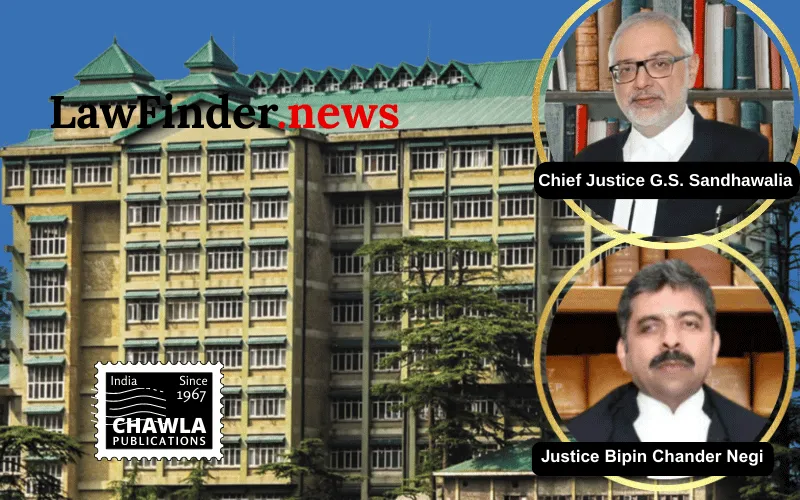
The division bench comprising Chief Justice G.S. Sandhawalia and Justice Bipin Chander Negi emphasized that the principles of constructive res judicata are applicable to writ petitions. The court held that matters which could have been raised in previous litigations but were omitted cannot be litigated afresh. The appellant sought to withdraw the writ petition to file a new claim asserting rights as a "Mohtamin" of the temple, a plea not raised in earlier proceedings. This attempt was thwarted by the doctrine of constructive res judicata, aiming to prevent abuse of the court's process.
The High Court noted that the appellant’s claim was also barred by the Limitation Act, 1963, since the temple was taken over by the government in 2006 and any claim should have been raised within 12 years of that event. Moreover, the dispute involved questions of fact that were deemed unsuitable for resolution under writ jurisdiction and instead required adjudication by a civil court.
The court further highlighted the necessity for litigants to approach the judiciary with clean hands, stressing that frivolous and misconceived petitions constitute an abuse of judicial processes. The judgment reiterated that the court cannot grant reliefs not explicitly claimed in the petitions and underscored the importance of adhering to procedural norms even in writ proceedings.
The decision also referenced multiple Supreme Court rulings to support its stance on constructive res judicata, limitations, and the clean hands doctrine. The court concluded by dismissing the Letters Patent Appeal, finding no merit in it, and reinforcing the sanctity of finality in judicial decisions.
Bottom Line:
A party cannot be allowed to withdraw a writ petition at the appellate stage to raise a new plea or destroy the decree passed by the trial court, especially if the plea was not claimed in prior litigations and is barred by limitation or constructive res judicata.
Statutory provision(s): Civil Procedure Code, 1908 Section 11, Limitation Act, 1963 Article 107, Himachal Pradesh Hindu Public Religious Institutions and Charitable Endowments Act, 1984 Section 21
Hari Ram (deceased) v. State of HP, (Himachal Pradesh)(DB) : Law Finder Doc id # 2868215