Arrests Prior to Mihir Rajesh Shah Verdict Not Invalidated by Procedural Changes, Court Rules
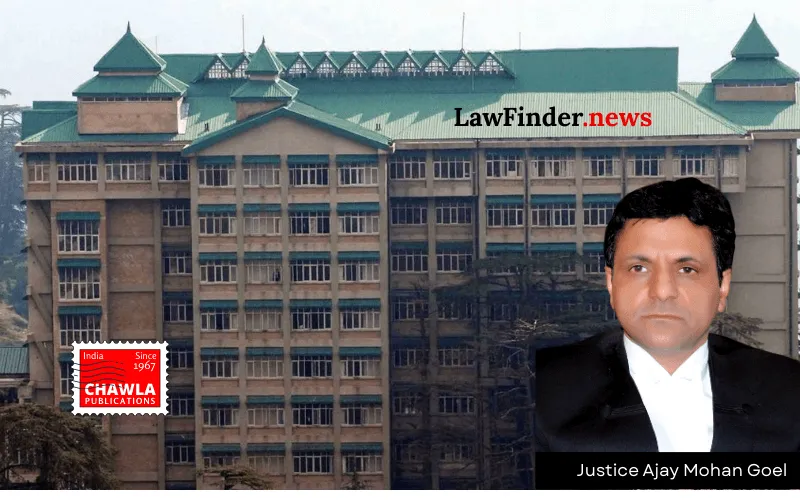
Shimla, 18th November 2025 - In a significant ruling, the Himachal Pradesh High Court, under the stewardship of Justice Ajay Mohan Goel, has dismissed petitions challenging the legality of arrests made prior to the Supreme Court’s landmark judgment in Mihir Rajesh Shah v. State of Maharashtra. The petitioners, including Kabir Khan, contended that their arrests violated Article 22(1) of the Indian Constitution, which mandates the communication of arrest grounds. However, the court upheld the arrests, citing the prospective nature of the Supreme Court’s judgment.
The judgment in question, delivered by the Supreme Court in 2025, revolutionized arrest procedures by enforcing a mandatory communication of arrest grounds in a language understood by the arrestee. It aimed to bolster the Constitutional safeguard of personal liberty as enshrined in Article 22(1). Despite its transformative implications, the Supreme Court explicitly stated that its ruling would only apply to arrests made after its pronouncement.
Justice Goel emphasized this prospective application, stating that the procedural mandates established by the Supreme Court do not retroactively affect arrests executed before the judgment. Consequently, the arrests challenged in these petitions remain valid under the previous legal framework.
The High Court acknowledged the importance of the Supreme Court's ruling, which was designed to ensure fair treatment of arrestees and prevent misuse of arrest procedures. However, it maintained that the Supreme Court’s decision intentionally avoided retroactivity to preserve legal certainty and fairness in the criminal justice system.
Furthermore, Justice Goel clarified that the High Court’s decision did not delve into the merits of each arrest case, nor did it imply any definitive assessment regarding compliance with Article 22(1) before the Supreme Court’s judgment.
This ruling underscores the judiciary’s commitment to upholding legal principles while adapting to evolving procedural standards. It also highlights the judiciary’s role in balancing the implementation of new legal standards with the preservation of established legal processes.
Legal experts interpret the decision as a necessary affirmation of procedural integrity, ensuring that changes in legal mandates do not disrupt previously conducted legal actions. The High Court’s ruling serves as a reminder of the judiciary's measured approach in applying new legal standards, safeguarding both historical legal actions and future procedural advancements.
Bottom Line:
Arrests made prior to the judgment in Mihir Rajesh Shah v. State of Maharashtra and another, 2025 INSC 1288, cannot be declared illegal based on the procedural mandate laid down in the said judgment, as the Supreme Court has made the judgment prospective in application.
Statutory provision(s): Article 22 of the Constitution of India, Narcotic Drugs and Psychotropic Substances Act, 1985, Sections 20, 22, 25, 29 of NDPS Act, Sections 363, 376DA of IPC, Section 6 of POCSO Act, Sections 302, 323, 324, 307, 452, 147, 148, 149, 342, 328, 420, 465, 468, 471, 201 of IPC, Bharatiya Nyaya Sanhita, 2023, Section 47 of BNSS 2023.
Kabir Khan v. State of Himachal Pradesh, (Himachal Pradesh) : Law Finder Doc Id # 2817956