Court dismisses appeal against single judge's order, emphasizes evidentiary basis for resolving mixed questions of law and fact.
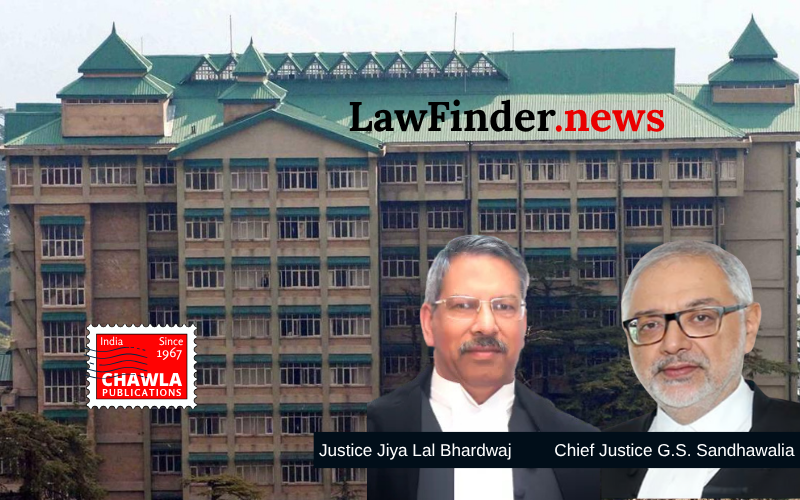
In a significant ruling, the Himachal Pradesh High Court has upheld a decision by a single judge to dismiss an application for the rejection of a plaint concerning the management of the Shri Jathia Devi Temple. The Division Bench, comprising Mr. G.S. Sandhawalia, CJ, and Jiya Lal Bhardwaj, J., delivered the judgment on November 28, 2025, reinforcing the principle that cases involving mixed questions of law and fact, particularly in matters of public trust, require a full evidentiary hearing.
The case, titled Himinder Lal v. Madan Lal, revolved around allegations of mismanagement and unlawful alienation of trust property associated with the temple, which is considered a local deity by residents of surrounding villages. The plaintiffs, asserting their rights as worshippers and beneficiaries, sought the removal of current trustees and the annulment of a controversial 1986 sale deed, which allegedly transferred temple land to private parties.
The appellants, represented by Mr. Neeraj Gupta, contended that the suit was barred by limitation and lacked merit, arguing that the sale deed in question was executed decades ago. They sought the rejection of the plaint under Order VII Rule 11 of the Civil Procedure Code (CPC), emphasizing that the legal challenges were time-barred and that the plaintiffs had no standing to sue.
However, the court reaffirmed the single judge's stance, highlighting that the allegations of fraud and breach of trust necessitated a thorough examination of evidence. It was noted that the plaint could not be dismissed solely based on the defendants' arguments without assessing the substantive claims made by the plaintiffs.
The bench cited several Supreme Court precedents, emphasizing that only vexatious and meritless litigation could be dismissed at the preliminary stage without evidence. The judgment referenced the principle that issues of fraud and the validity of trust property alienation are inherently complex and warrant detailed scrutiny in trial.
Crucially, the court underscored that the plaint could not be rejected in part, supporting the plaintiffs' right to a full hearing to address all aspects of the case. This decision aligns with the broader judicial perspective that legal disputes involving public trusts and community interests must be meticulously resolved, ensuring justice for all stakeholders.
The ruling has significant implications for the management of religious and charitable trusts, reinforcing the judiciary's commitment to upholding the integrity of public assets and ensuring their proper administration.
Bottom Line:
Application under Order VII Rule 11 CPC must be decided based on the averments in the plaint alone. Issues involving mixed questions of law and fact, such as limitation and alienation of trust property, cannot be adjudicated at the stage of rejection of plaint.
Statutory provision(s): Civil Procedure Code, 1908 Section 92, Civil Procedure Code, 1908 Order VII Rule 11
Himinder Lal v. Madan Lal, (Himachal Pradesh)(DB) : Law Finder Doc Id # 2814048