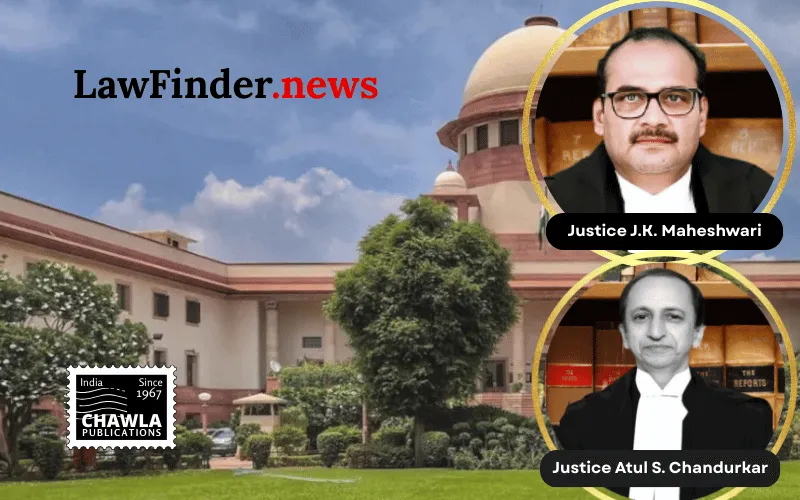
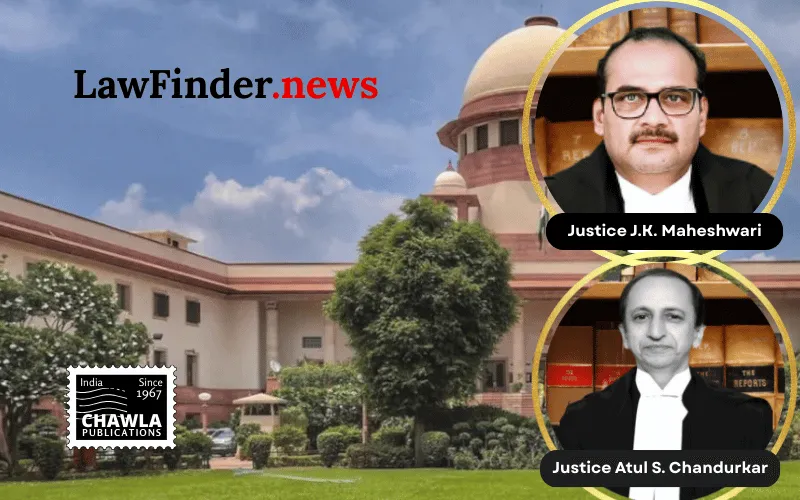
Supreme Court Declares Unilateral Appointment of Arbitrator Void, Sets Aside Arbitral Awards in Bhadra International v. Airports Authority of India Case Apex Court Emphasizes Mandatory Written Waiver Under Section 12(5) of Arbitration Act, 1996, Rejects Implied Waiver by Conduct, Upholds Principle of Equal Treatment of Parties
In a landmark judgment delivered on January 5, 2026, the Supreme Court of India in Civil Appeal Nos. 37-38 of 2026, arising from Special Leave Petition (C) Nos. 16107-16108 of 2025, critically examined the legality of unilateral appointment of a sole arbitrator under the Arbitration and Conciliation Act, 1996. The case involved Bhadra International (India) Pvt. Ltd. and others (Appellants) and the Airports Authority of India (Respondent).
The Court unequivocally held that the unilateral appointment of an arbitrator is void ab initio and an arbitrator appointed unilaterally by a party lacking impartiality and independence is de jure ineligible to act. Consequently, any arbitral awards passed by such an arbitrator are non-est and against the public policy of India. The judgment clarified that the ineligibility under Section 12(5) of the Act, introduced by the Arbitration and Conciliation (Amendment) Act, 2015, cannot be waived except by an express written agreement entered into after disputes have arisen.
The factual matrix revealed that the arbitration clause in the License Agreement between the parties empowered the Chairman of the Airports Authority of India to appoint a sole arbitrator. However, post the 2015 amendment, such unilateral appointments by a party with an interest in the dispute fall foul of Section 12(5) read with the Seventh Schedule, which lists categories disqualifying a person from being appointed as an arbitrator.
The appellants contended that the sole arbitrator was appointed unilaterally by the Chairman, who was ineligible under the statute, rendering the appointment void and the awards passed by such an arbitrator null. They further argued that they had not waived their right to object as no express written waiver was executed after the dispute arose.
The respondent countered that the appellants had consented to the arbitrator’s appointment by participating in the proceedings, filing pleadings, and agreeing to procedural orders, including the first procedural order recording no objection to the arbitrator’s appointment. They relied on these acts to assert an implied waiver under the proviso to Section 12(5).
The Supreme Court rejected this argument with detailed reasoning, holding that:
1. The principle of equal treatment of parties under Section 18 of the Act applies not only to arbitral proceedings but also to the appointment process, mandating equal say in the constitution of the arbitral tribunal. Unilateral appointments violate this principle and create a reasonable apprehension of bias.
2. Section 12(5) explicitly renders persons with certain relationships ineligible as arbitrators regardless of prior agreement, and such ineligibility can only be waived by an express written agreement after the dispute has arisen. Mere participation, procedural orders, or filing of pleadings do not amount to such waiver.
3. The Court underscored that “express agreement in writing” means a clear and unequivocal written consent by parties fully aware of the arbitrator’s ineligibility. This cannot be inferred from conduct or tacit acceptance.
4. The arbitrator’s mandate automatically terminates upon becoming de jure ineligible under Section 12(5), and aggrieved parties may seek termination of the mandate and substitution under Sections 14 and 15.
5. An objection to the arbitrator’s appointment on grounds of ineligibility can be raised at any stage, including for the first time in proceedings under Section 34, as an award passed by an ineligible arbitrator is void and unenforceable.
The Court set aside the impugned judgment of the Delhi High Court and the arbitral awards dated July 30, 2018, holding that the appointment violated the mandatory provisions of the Arbitration and Conciliation Act, 1996, as amended. It left open the possibility for the parties to initiate fresh arbitration proceedings in conformity with the law.
This ruling reinforces the sanctity of impartial and independent arbitral tribunals and the supremacy of statutory provisions governing arbitrator appointments, especially post the 2015 amendments. It clarifies that party autonomy does not extend to circumventing mandatory disqualifications and that fairness and neutrality in arbitration are paramount and non-negotiable.
Bottom Line:
Unilateral appointment of an arbitrator is void ab initio and an award passed by such an arbitrator is non-est in law and against public policy of India - The ineligibility of an arbitrator under Section 12(5) of the Arbitration and Conciliation Act, 1996, can only be waived by an express agreement in writing between the parties after disputes have arisen.
Statutory provision(s): Arbitration and Conciliation Act, 1996 Section 12(5), Section 14(1)(a), Section 15, Section 18, Section 29A, Section 34, Seventh Schedule of Arbitration and Conciliation Act, 1996