Supreme Court Restores NCLT's Order, Overturns NCLAT's Judgment in Insolvency Dispute Mere Moonshine Defence of Pre-Existing Disputes by Corporate Debtor Insufficient; Supreme Court Emphasizes Correct Legal Standards
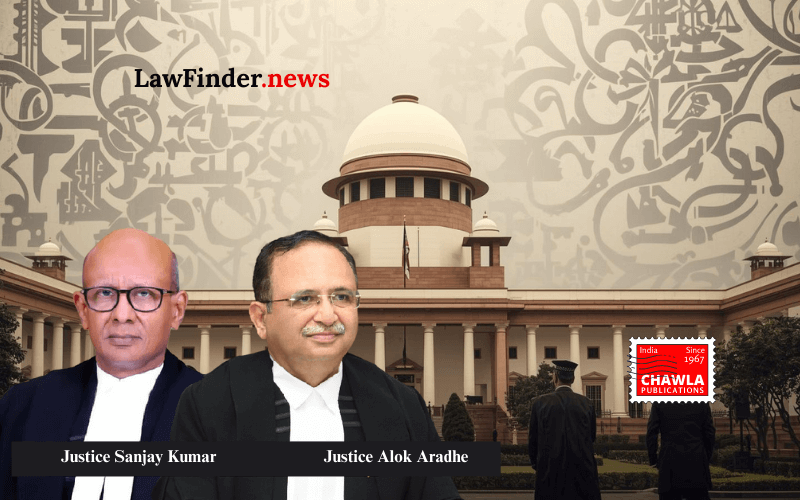
In a significant ruling, the Supreme Court of India has restored the order of the National Company Law Tribunal (NCLT) in an insolvency case involving M/s. Saraswati Wire and Cable Industries and corporate debtor Dhanlaxmi Electricals Private Limited. The judgment, delivered by Justices Sanjay Kumar and Alok Aradhe, overturns the National Company Law Appellate Tribunal (NCLAT)'s decision that had previously set aside the NCLT's order based on alleged pre-existing disputes.
The case originated when M/s. Saraswati Wire and Cable Industries initiated the Corporate Insolvency Resolution Process (CIRP) under Section 9 of the Insolvency and Bankruptcy Code (IBC) against Dhanlaxmi Electricals. The NCLT admitted the application, but the NCLAT later reversed this decision, citing pre-existing disputes between the parties.
However, the Supreme Court found that the corporate debtor's defence of pre-existing disputes was mere "moonshine" and not genuine. The court noted that the National Company Law Appellate Tribunal had erred in overlooking material evidence, including the corporate debtor's own ledger accounts, which confirmed the debt owed to M/s. Saraswati Wire and Cable Industries.
Key issues included the NCLAT's failure to recognize the payments made by the corporate debtor after the demand notice was issued, which negated the claim of pre-existing disputes. The Supreme Court emphasized that the NCLAT did not apply the correct legal standard, leading to an erroneous decision. The adjudicating authority must separate genuine disputes from spurious defences and ensure that IBC proceedings are not delayed by insubstantial claims.
In its judgment, the Supreme Court reiterated the importance of determining whether disputes are bona fide or merely raised to delay proceedings. The court underscored that defences must be credible and substantial, rather than hypothetical or illusory.
The ruling reinforces the principles set forth in earlier cases, such as Mobilox Innovations Private Limited v. Kirusa Software Private Limited, where the Supreme Court highlighted the need to distinguish between genuine disputes and mere bluster in IBC proceedings.
The Supreme Court's decision reinstates the NCLT's admission order, allowing the CIRP to proceed against Dhanlaxmi Electricals, and underlines the necessity for adjudicating authorities to apply the correct legal standards in insolvency cases.
Bottom Line:
Mere moonshine defence of pre-existing disputes by a corporate debtor is insufficient to reject an operational creditor's application under Section 9 of the IBC. NCLAT's failure to consider the full facts and material evidence, including the corporate debtor's own ledger account confirming the debt, led to an erroneous decision.
Statutory provision(s): Insolvency and Bankruptcy Code, 2016 - Section 9