Supreme Court Overturns NCDRC's Ruling on Insurance Claim Rejection. Insurer's Repudiation of Boiler Explosion Claim Based on Exclusion Clause Deemed Unjustified by Apex Court
In a landmark judgment dated November 13, 2025, the Supreme Court of India has set aside the National Consumer Disputes Redressal Commission's (NCDRC) decision that dismissed the insurance claim filed by Karmaveer Shankarrao Kale Shahkari Shakhar Karkhana Ltd. against National Insurance Co. Ltd. The case revolved around the repudiation of an insurance claim following a boiler explosion at the appellant's facility, with the insurer citing exclusion clause 5 of the Boiler and Pressure Plant Insurance Policy.
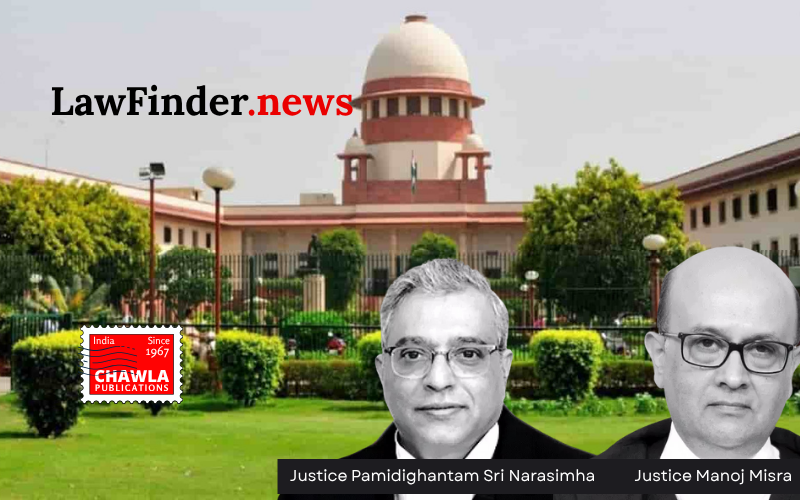
The Supreme Court bench comprising Justices Pamidighantam Sri Narasimha and Manoj Misra ruled in favor of the appellant, asserting that the insurance company failed to substantiate its rejection of the claim based on the exclusion clause. The apex court emphasized that the insurer's responsibility is to prove any suppression or misrepresentation of material facts by the insured, which was not demonstrated in this case.
The appellant's boiler, insured for Rs. 1.60 crores, experienced an explosion on May 12, 2005. Despite the boiler being certified for use under the Boilers Act, 1923, and having a valid fitness certificate at the time of the incident, the insurance company denied the claim. The repudiation was primarily based on a surveyor's report that attributed the accident to corrosion and wear of the boiler tubes, suggesting they had outlived their serviceable life since being fitted in 1986.
The Supreme Court criticized the insurer's reliance on subsequent defects discovered post-explosion to repudiate the claim, highlighting that these defects could have resulted from the explosion itself. The court underscored the principle that exclusion clauses should be interpreted to preserve the main purpose of the insurance contract, which is indemnification.
Justice Misra, delivering the judgment, stated, "A subsequent discovery of damage or corrosion cannot be used to repudiate the claim as it would defeat the main purpose of the insurance contract." The court further noted that the burden of proof lies heavily on the insurer, especially when the accident occurs during the period of the boiler's certified registration.
This ruling is significant as it reinforces the obligations of insurers under contracts of utmost good faith and clarifies the interpretation of exclusion clauses in insurance policies. The Supreme Court's decision restores the appellant's appeals to the NCDRC for reconsideration of the compensation amount, directing a focus solely on the quantum of damages payable.
Both parties are to bear their own costs, and the Supreme Court has declined to entertain the insurer's plea to seek alternative remedy through the High Court, emphasizing the case's readiness for resolution.
Bottom Line:
Insurance Policy - Claim under boiler insurance repudiated by the insurer based on exclusion clause 5 - Insurer's liability cannot be evaded solely on subsequent discovery of defects in boiler parts post-explosion - Burden lies on the insurer to prove suppression or misrepresentation of material facts by insured - Exclusion clause to be interpreted in a manner that does not defeat the main purpose of the insurance contract.
Statutory provision(s): Boilers Act, 1923, Consumer Protection Act, 1986, Indian Contract Act, 1872, Article 136 of the Constitution of India