Supreme Court Safeguards Advocate-Client Privilege, Restricts Summoning of Advocates by Investigating Agencies. Landmark Judgment Reinforces Confidentiality of Legal Communications, Outlines Conditions for Summoning Advocates
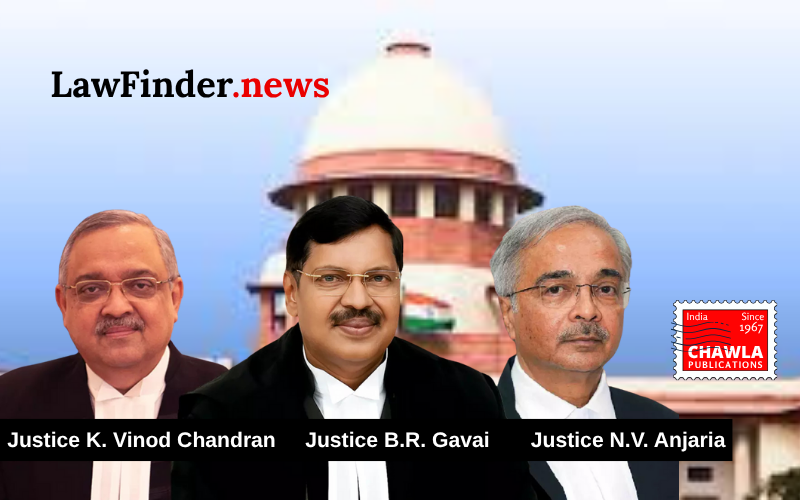
In a significant ruling, the Supreme Court of India has reinforced the confidentiality of advocate-client communications, prohibiting investigating agencies from summoning advocates to disclose case details unless specific exceptions are met. This decision, delivered by a bench comprising Chief Justice B.R. Gavai, Justice K. Vinod Chandran, and Justice N.V. Anjaria, underscores the sacrosanct nature of legal privileges under the Bharatiya Sakshya Adhiniyam, 2023 (BSA).
The judgment arose from a suo motu writ petition addressing the issuance of a summons to an advocate under Section 179 of the Bharatiya Nagarik Suraksha Sanhita, 2023 (BNSS), in connection with a criminal investigation. The Supreme Court emphasized that advocate-client privilege, enshrined under Section 132 of the BSA, is pivotal to ensuring justice and protecting the rights of clients.
The court categorically stated that no advocate can be summoned merely for representing a party unless the communication falls under specific exceptions, such as furtherance of illegal activity or observation of post-engagement crime or fraud. Any summons must explicitly outline these exceptions and secure prior approval from a superior officer not below the rank of a Superintendent of Police.
Furthermore, the court highlighted that advocates have the right to challenge such summons under Section 528 of the BNSS, ensuring judicial oversight in protecting legal privileges. The judgment also clarified that in-house counsel, being full-time salaried employees, do not qualify for advocate-client privilege under Section 132 but may seek limited protection under Section 134 for communications made to legal advisors.
This landmark ruling reaffirms the crucial role of advocates in the justice system, ensuring their ability to provide fearless representation without fear of coercion or breach of confidentiality. It also delineates the boundaries for investigating agencies, mandating adherence to statutory provisions before summoning advocates.
The Supreme Court's decision is expected to have far-reaching implications, strengthening the legal profession's integrity and safeguarding clients' rights across the country.
Bottom Line:
Investigating agencies cannot directly summon an advocate representing a party to elicit details of the case unless exceptions under Section 132 are satisfied. Summons must specify the facts related to the exceptions and require superior officer approval.
Statutory provision(s): Bharatiya Sakshya Adhiniyam, 2023 Section 132, Bharatiya Nagarik Suraksha Sanhita, 2023 Sections 175, 179, 528