Landmark judgment affirms legal certainty and dismisses selective challenges by the government.
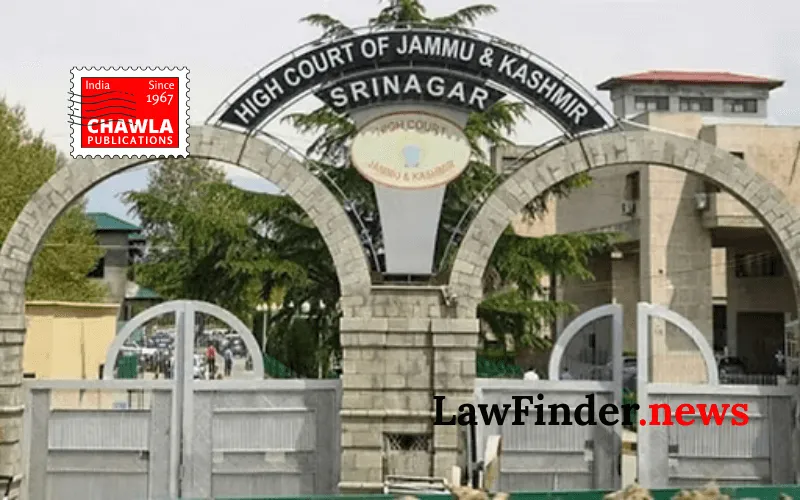
In a significant ruling, the Jammu and Kashmir High Court has upheld a judgment allowing the alienation of land granted under Government Order No. S-432 of 1966 for agricultural purposes without the need for prior permission from the government. This decision reinforces the principle of legal certainty and the doctrine of stare decisis, emphasizing the importance of adhering to long-standing judicial precedents unless they are manifestly erroneous.
The case, Union Territory of Jammu & Kashmir v. Ravinder Kanta, revolved around the rejection of an application by Ravinder Kanta and others for the issuance of Fard Intikhab, a necessary document for the sale of land. The application was initially rejected by the Tehsildar on the grounds that it violated Government Order No. S-432 of 1966, which stipulated that land granted for agricultural purposes could not be alienated without government permission.
However, the writ petition filed by the respondents was allowed by the learned writ Court, which directed the issuance of Fard Intikhab and subsequent registration of the sale deed. The writ Court’s decision was based on earlier judgments, particularly Mohammad Akbar Shah v. State of J&K, which had declared the condition of seeking prior government permission for land alienation as otiose.
The appellants, representing the Union Territory of Jammu & Kashmir, challenged the writ Court's judgment, asserting that the government order's stipulation was clear and should be adhered to. However, the High Court bench, comprising Chief Justice Arun Palli and Justice Rajnesh Oswal, dismissed the appeal, citing the principle of legal finality and the necessity of maintaining judicial stability.
The bench noted that the law on this point had been settled for nearly a decade and emphasized that selective challenges by the government undermine judicial discipline. The judgment further highlighted that the change in economic circumstances, where agriculture is no longer the primary activity, renders the old stipulation unnecessary and ineffective.
The High Court's decision is a reaffirmation of the doctrine of stare decisis, which holds that decisions rendered over a significant duration should not be unsettled lightly unless manifestly erroneous. This judgment is seen as a significant step in ensuring legal certainty and stability in the administration of justice in the region.
Bottom line:-
Land granted under Government Order No. S-432 of 1966 for agricultural purposes can be alienated without prior permission of the Government, provided statutory requirements for such alienation are fulfilled. Judicial discipline and settled positions of law must not be disturbed unless manifestly erroneous.
Statutory provision(s): Government Order No. S-432 of 1966, Doctrine of Stare Decisis