Interim Stay Granted on Subordinate Court Proceedings as Petitioner Questions Legislative Authority
In a significant development, the Jammu and Kashmir High Court has admitted a petition challenging the amendments made to the Code of Civil Procedure, 1908, as applicable to the Union Territory of Jammu and Kashmir under the J&K Reorganization (Adaptation of Central Laws) Order, 2020. The petition, filed by Dhruv Mahajan, questions the legislative competence of the Union Government, asserting the amendments to be ultra vires due to the lack of substantive power conferred under Section 96 of the Jammu and Kashmir Reorganization Act, 2019.
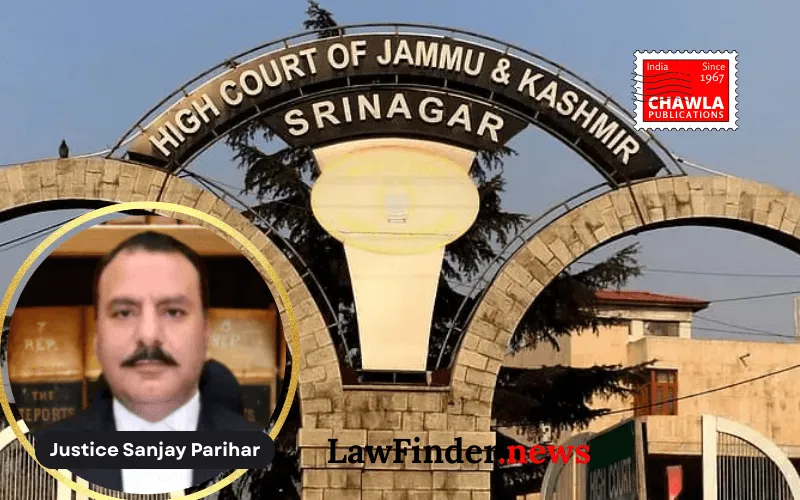
The case was heard by Justice Sanjay Parihar, who found prima facie merit in the petitioner's claims. As a result, the court admitted the petition and issued an interim stay on related proceedings in the case of Subash Chander v. Dhruv Mahajan and Another, pending before the 3rd Civil Subordinate Judge (Special Excise Mobile Magistrate), Jammu. This stay will remain effective until the next hearing scheduled for March 12, 2026.
The petitioner, represented by Advocate Mr. Faizul Arif, argues that the amendments to Order V Rule 1 and Order VIII Rules 1 and 10 of the Code of Civil Procedure, 1908, exceed the scope provided by Section 96 of the Jammu and Kashmir Reorganization Act, 2019. The counsel for the petitioner highlighted that similar challenges are pending before the court, with even a Larger Bench examining the issue.
Respondents, including the Union of India, represented by Senior Additional Advocate General Mrs. Monika Kohli and Advocate Ms. Priyanka Bhat, have been directed to file a counter affidavit before the next date of hearing. Notices have been issued to all respondents, with requisite steps for service to be completed within one week.
This legal challenge is set against the backdrop of Jammu and Kashmir's reorganization and the adaptation of central laws following the abrogation of its special status. The court's decision to admit the petition reflects the ongoing legal scrutiny surrounding legislative changes in the region.
The outcome of this case could have significant implications for the legislative autonomy and legal framework governing Jammu and Kashmir. Legal experts and stakeholders are closely watching the proceedings, which may set a precedent for future challenges to legislative amendments in the Union Territory.
Bottom Line:
The petitioner challenged the amendments made to the Code of Civil Procedure, 1908, as applicable to the Union Territory of Jammu and Kashmir, under the J&K Reorganization (Adaptation of Central Laws) Order, 2020, claiming them to be ultra vires due to lack of substantive power conferred under Section 96 of the Jammu and Kashmir Reorganization Act, 2019.
Statutory provision(s): Article 226 of the Constitution of India, Section 96 of the Jammu and Kashmir Reorganization Act, 2019, Order V Rule 1, Order VIII Rules 1 and 10 of the Code of Civil Procedure, 1908.
Dhruv Mahajan v. Union of India, (Jammu And Kashmir) : Law Finder Doc id # 2844805