Court Directs Magistrate to Dispose of Complaint as Per Compromise and Allows Respondent to Seek Execution for Non-compliance
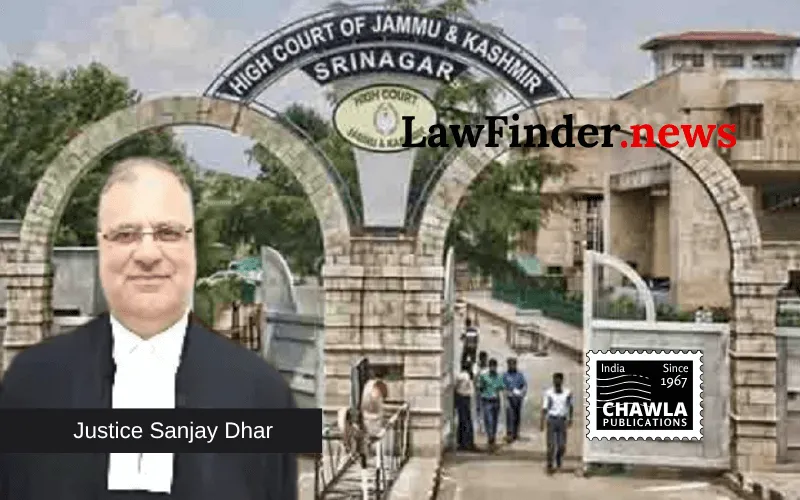
In a significant ruling, the Jammu and Kashmir High Court has directed the proper handling of complaints under the Negotiable Instruments Act regarding dishonored cheques when parties have reached a compromise. The judgment, delivered by Justice Sanjay Dhar, addresses the procedural missteps taken by a trial Magistrate in a case involving a compromise over a dishonored cheque amounting to Rs. 17,18,000.
The case, titled "Sajad Ahmad Malik v. Gulzar Ahmad Wani," involved a complaint filed by Gulzar Ahmad Wani against Sajad Ahmad Malik under Section 138 of the Negotiable Instruments Act. The dispute arose from a dishonored cheque issued by Malik. During the pendency of the case, the parties reached a compromise on October 15, 2024, wherein Malik agreed to pay the agreed sum in installments.
The trial Magistrate, however, instead of disposing of the complaint based on the compromise, proceeded to monitor the adherence to its terms, acting as an executing court. This approach was challenged by Malik, leading to the current High Court ruling.
Justice Dhar clarified that once a compromise is reached, the Magistrate should dispose of the complaint in accordance with the compromise terms. Should there be a breach of the compromise, the respondent has the right to file an execution petition under Section 421 of the Criminal Procedure Code (Cr.PC). This section empowers the court to enforce payment of a fine by issuing a warrant for the levy of the amount through the attachment and sale of any movable property of the defaulter.
The High Court observed that the trial Magistrate’s action of monitoring compliance was not in accordance with the law. The Court emphasized that the complaint should be disposed of in terms of the compromise, and any subsequent non-compliance should be addressed through an execution petition.
The decision underscores the importance of adhering to legal procedures when handling cases of this nature and provides clarity on the role of Magistrates in such matters. The ruling is expected to streamline the process for resolving disputes involving dishonored cheques and compromise agreements.
The High Court's direction to the trial Magistrate ensures that the legal process is followed correctly, thereby safeguarding the rights of both parties involved in such disputes.
Bottom Line:
Negotiable Instruments Act - Magistrate should dispose of the complaint in terms of the compromise between parties, rather than acting as an executing court to monitor adherence to the compromise terms.
Statutory provision(s): Negotiable Instruments Act, 1881 Section 138, Criminal Procedure Code Section 421
Sajad Ahmad Malik v. Gulzar Ahmad Wani, (Jammu And Kashmir)(Srinagar) : Law Finder Doc Id # 2828966