Court rules writ jurisdiction not applicable for private contractual disputes in unaided schools.
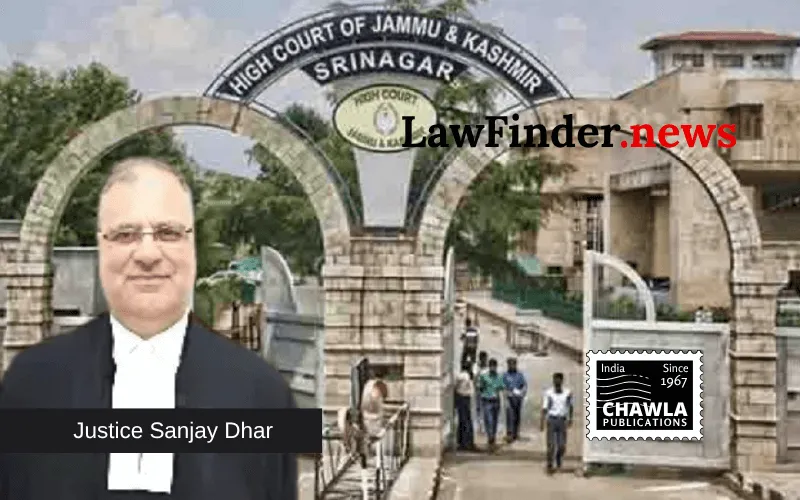
In a significant ruling, the Jammu and Kashmir High Court dismissed the writ petition filed by Malika, a primary teacher, challenging her non-selection in Maharaja Hari Singh DAV Centenary Public School, Akhnoor. The judgment, delivered by Justice Sanjay Dhar, emphasized the limitations of judicial review concerning private law rights within unaided private educational institutions.
Malika, who had served as a Primary Teacher (PRT) at the school since 2014 on a contractual basis, contested her exclusion from the select list issued in July 2023. Despite her nine years of service and qualifying credentials, her name was placed on the waiting list following an interview process. She argued that the selection process was arbitrary and favored candidates lacking the necessary qualifications.
Respondents, including the UT of J&K and the Chairman of CBSE, distanced themselves from the selection process, asserting the petition's non-maintainability against the private school. Respondents 3 and 4, representing the school administration, maintained that the selection was a prerogative based on merit and performance, asserting the contractual nature of Malika’s employment.
Justice Dhar highlighted the scope of Article 226 of the Constitution, which extends writ jurisdiction to private bodies performing public duties, but clarified that disputes rooted in private contracts do not fall within this scope. The court cited precedents from the Supreme Court, notably the case of Andi Mukta Sadguru Shree Muktajee Vandas Swami Suvarna Jayanti Mahotsav Smarak Trust v. V.R. Rudani, delineating the conditions under which writs can be issued against private entities.
The court reiterated that while private unaided schools may perform public duties, the employment contracts of teachers constitute private law matters. It noted that judicial review is confined to actions with a public duty element, which was absent in Malika's case, as her employment did not involve statutory obligations or public law elements.
The judgment aligns with previous rulings from the Jammu and Kashmir High Court, reinforcing the position that private contractual disputes in educational institutions are outside the purview of writ jurisdiction under Article 226. Malika's petition was dismissed, with the court advising her to seek alternative legal remedies.
This ruling underscores the judiciary's stance on the separation of private contractual rights from public law duties, marking a critical clarification for contractual employment disputes in private educational settings.
Bottom Line:
Writ petition under Article 226 of the Constitution of India is maintainable against a private body performing public duty, but judicial review is confined to actions involving public duty. Private law rights, such as those arising from a contract of service, are not enforceable against private institutions through a writ petition.
Statutory provision(s): Article 226 of the Constitution of India
Malika v. UT of J&K, (Jammu And Kashmir) : Law Finder Doc id # 2845392