Eduspark International Pvt. Ltd. challenges penalty and recovery notices despite existing arbitration agreement; court to decide maintainability of the writ petition.
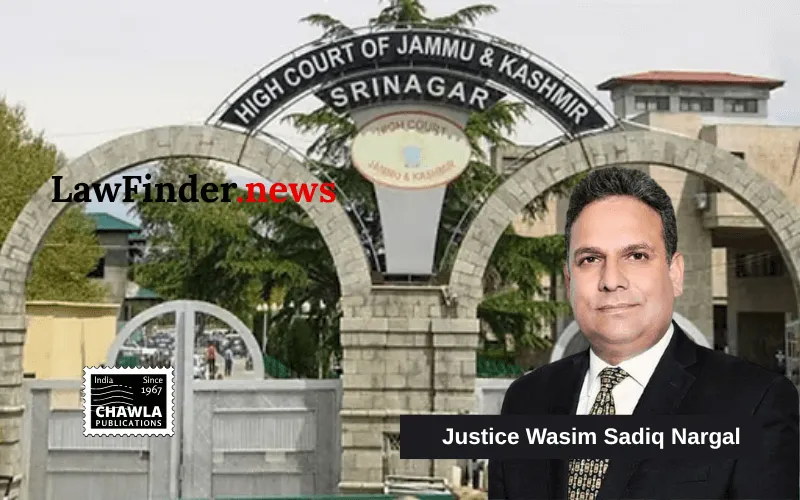
The Jammu and Kashmir High Court, presided over by Justice Wasim Sadiq Nargal, is currently evaluating the maintainability of a writ petition filed by Eduspark International Pvt. Ltd. against the Union of India and others. The petition challenges the imposition of penalties and recovery notices issued under a Memorandum of Understanding (MoU) containing an arbitration clause.
Eduspark International Pvt. Ltd., represented by Senior Advocate Mr. Rahul Pant, has raised objections to a penalty of Rs. 5,65,048 and a recovery notice amounting to Rs. 2,82,52,397, issued by the Himayat Mission Management Unit (HMMU). The petitioner contends that the arbitration clause in the MoU is not a valid arbitration agreement under the Arbitration and Conciliation Act, 1996, thus making the writ petition maintainable under Article 226 of the Constitution of India due to the arbitrary nature of the notices and violation of natural justice principles.
The court's deliberations are focused on the arbitration clause of the MoU, which designates the Chief Secretary of Jammu and Kashmir as the arbiter for any disputes arising under the agreement. Despite this, the petitioner argues that the clause does not meet the legal criteria for a binding arbitration agreement, relying on precedents from the Supreme Court and the Chhattisgarh High Court.
The court has expressed concern over the prolonged delay in the appellate process, noting that an appeal filed by Eduspark in May 2022 remains undecided after more than four years. This delay has been cited by the petitioner as a reason for seeking relief through the writ petition.
Justice Nargal has directed the respondents to provide a detailed response regarding the maintainability of the writ petition and to explain the reasons for the delay in the appellate proceedings. The court has deferred any interim relief until these issues are addressed, setting the next hearing for March 2, 2026.
As the legal battle unfolds, the case highlights the tensions between contractual arbitration clauses and the right to seek judicial review under constitutional provisions, particularly when procedural delays impede access to justice.
Bottom Line:
Writ petition maintainability under Article 226 of the Constitution of India despite the presence of an arbitration clause in the MoU.
Statutory provision(s): Article 226 of the Constitution of India, Arbitration and Conciliation Act, 1996 Section 7