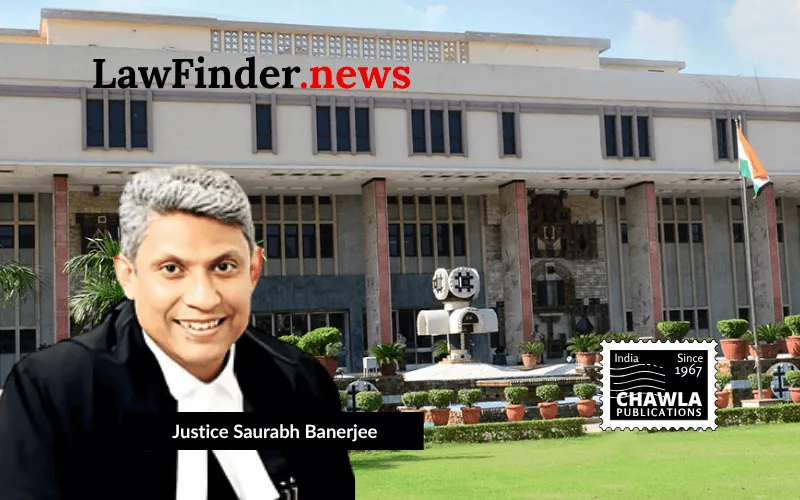
Court Finds Lack of Prima Facie Evidence for Caste-Based Abuse Allegations Under SC/ST Act
In a significant legal development, the Jammu and Kashmir High Court has granted anticipatory bail to Santosha Devi, a member of the District Development Council Kastigarh, who was accused of caste-based abuse under the Scheduled Castes and Scheduled Tribes (Prevention of Atrocities) Act, 1989. The bail was granted by Justice Rajesh Sekhri on April 2, 2026, after the court found insufficient prima facie evidence to support the allegations of caste-based abuse.
The case against Santosha Devi stemmed from an incident on January 8, 2026, during a public event for the inauguration of a road at Kastigarh. It was alleged that Devi, along with her sons, attacked the complainant and others, leading to physical violence and chaos. The complainant claimed that Devi, with the intent to humiliate, publicly used a derogatory caste-based slur against him, knowing he belonged to the 'Megh' community, a Scheduled Caste.
Despite the allegations, the High Court scrutinized the evidence, including video recordings and statements from witnesses, and found no substantial indication of caste-based abuse. The court noted that the video recordings only captured commotion without any clear audio evidence of the alleged slur. Moreover, in a press conference following the incident, while Devi admitted to assaulting the complainant, there was no admission of using any caste-based abuse.
Justice Sekhri emphasized the importance of distinguishing between general abuse and caste-specific insult in public view, as required under Sections 3(1)(r) and 3(1)(s) of the SC/ST Act. The judgment highlighted that the core of the offence under the SC/ST Act is the intent to humiliate someone specifically because of their caste identity. As such, the court found that the FIR did not disclose essential ingredients to attract the bar under Sections 18 and 18A of the SC/ST Act, allowing for the grant of bail.
The court granted bail with specific conditions, including restrictions on leaving the jurisdiction without permission, cooperating with the investigation, and refraining from influencing witnesses or tampering with evidence.
This case underscores the judiciary's role in carefully evaluating the substance of allegations to ensure that the provisions of the SC/ST Act are applied judiciously, avoiding misuse for personal or political vendettas.
Bottom Line:
Scheduled Caste and Scheduled Tribe (Prevention of Atrocities) Act - Ingredients of caste-based abuse under Sections 3(1)(r) and 3(1)(s) must be prima facie established from the FIR or complaint for the bar under Sections 18 and 18A to apply. Bail granted due to lack of prima facie evidence of caste-based insult or humiliation.
Statutory provision(s): Scheduled Castes and The Scheduled Tribes (Prevention of Atrocities) Act, 1989 Sections 3(1)(r), 3(1)(s), 18, 18A; Criminal Procedure Code, 1973 Section 438
Santosha Devi v. UT of J&K, (Jammu And Kashmir) : Law Finder Doc id # 2876687