Court Orders Restoration of Possession to Appellant, Citing Potential Violation of Right to Life Under Article 21
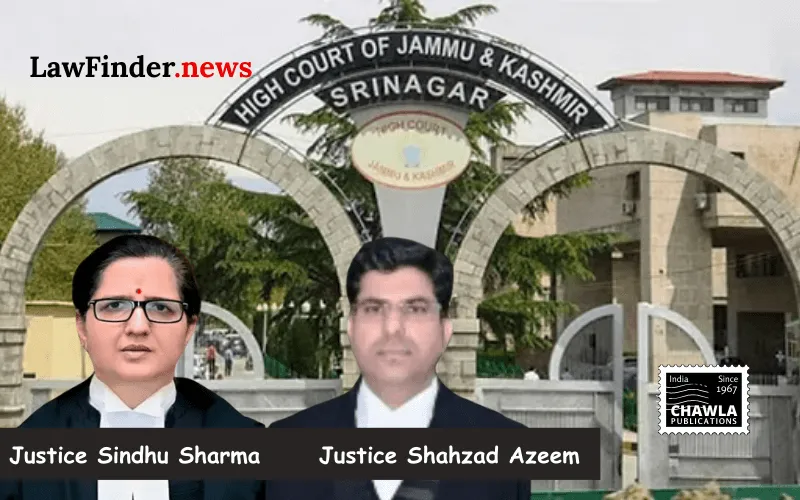
In a significant ruling, the Jammu and Kashmir High Court has set aside a previous order that led to the eviction of Noor Illahi Fakhtoo from his residential property in Hyderpora, Srinagar. The Division Bench, comprising Justices Sindhu Sharma and Shahzad Azeem, ruled in favor of Fakhtoo, granting him interim relief and ordering the restoration of possession of his house, which he had occupied for over two decades.
The case, which has seen multiple rounds of litigation, revolves around a land ownership dispute involving Fakhtoo and Ashok Koul, another claimant to the property. Fakhtoo had challenged an earlier order by the District Magistrate, which directed his eviction based on findings from a sub-committee that declared the land as belonging to Koul.
The High Court emphasized the need for interim relief to prevent irreparable injury and disruption to Fakhtoo's family life, which includes school-going children. The Bench highlighted that such actions could potentially violate the 'Right to Life' under Article 21 of the Indian Constitution. The Court underscored the importance of preserving the status quo and ensuring that judicial proceedings do not become illusory by allowing irreversible situations to arise during the pendency of the case.
The Court criticized the previous reliance on ambiguous reports and the delegation of decision-making powers without independent scrutiny by the statutory authority. It emphasized that statutory authorities must independently apply their minds and not merely act as rubber stamps for subordinate reports.
In its judgment, the Court noted that the appellant had a strong prima facie case, citing discrepancies in survey numbers and conflicting findings by revenue authorities. It acknowledged Fakhtoo as a bona fide purchaser who had constructed his house following due legal processes. The Court found that Fakhtoo's displacement would cause significant irreparable harm, justifying the interim protection.
The High Court's order mandates the restoration of Fakhtoo's possession of the house, while also directing the authorities to prepare an inventory of household items before handing over the keys. The interim relief will remain in effect until the final disposal of the writ petition in the ongoing case.
This decision underscores the judiciary's role in safeguarding citizens' rights and ensuring that procedural justice is upheld, particularly in matters involving residential premises and potential violations of fundamental rights.
Bottom Line:
Interim relief must aim to preserve the subject matter of litigation and prevent irreparable injury, especially in cases involving residential premises. Denial of such relief can lead to a violation of the 'Right to Life' under Article 21 of the Constitution of India.
Statutory provision(s):
Article 21 of the Constitution of India, Article 226 of the Constitution of India, Jammu & Kashmir Migrant Immovable Property (Preservation, Protection and Restraint on Distress Sales) Act, 1997, Jammu & Kashmir Abadideh Survey and Record Operations Regulations, 2022.