Court Rules Detention Order Based on Vague, Stale Grounds and Indicates Non-Application of Mind by Detaining Authority
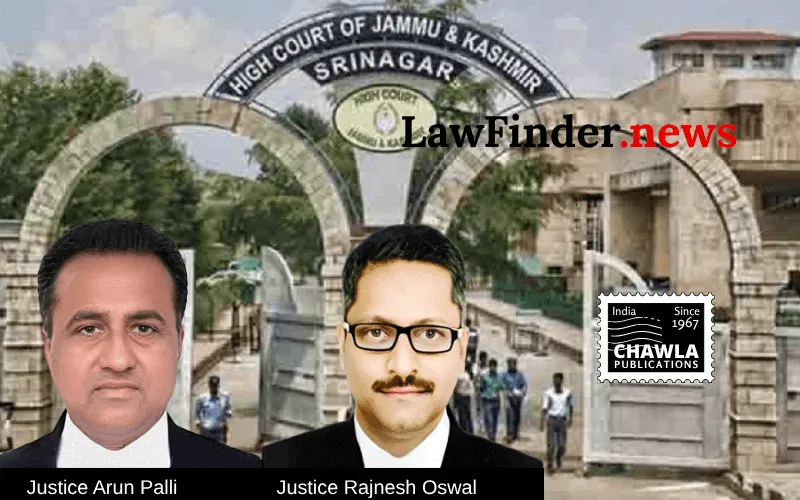
In a significant ruling, the Jammu and Kashmir High Court has quashed the preventive detention order against Huzaif Ahmad Dar, citing that the grounds for detention were vague, stale, and lacked proximate threat, thus violating constitutional safeguards. The Division Bench, comprising Chief Justice Arun Palli and Justice Rajnesh Oswal, delivered the judgment on January 29, 2026, in response to an appeal filed by Dar challenging his detention under the Jammu and Kashmir Public Safety Act, 1978.
The judgment highlights the necessity for clear, precise, and proximate grounds when issuing a preventive detention order, as mandated by Article 22(5) of the Constitution of India. The court criticized the detaining authority's reliance on vague allegations, such as Dar's purported contact with 'overground workers', without specific details or evidence to substantiate these claims. The detention was initially ordered on April 20, 2024, following an FIR from 2022, in which Dar was released due to insufficient evidence.
The judgment underscores the principle that preventive detention cannot be justified on stale or indefinite grounds, emphasizing the legal precedent set by the Supreme Court in cases like Jahangirkhan Fazalkhan Pathan v. Police Commissioner, Ahmedabad and Saeed Zakir Hussain Malik v. State of Maharashtra. The court noted the undue delay between the alleged activities and the detention order, which breaks the live-link necessary for sustaining such an order.
The decision to quash the detention order is a rebuke to the authorities for non-application of mind and arbitrary action, as the court found no proximate illegal activity attributed to Dar post-release. The High Court's ruling affirms the importance of constitutional safeguards in preventive detention cases, ensuring that individuals are not deprived of their liberty on vague and unsustainable grounds.
Huzaif Ahmad Dar, represented by Advocate Asif Ali, expressed relief at the judgment, which mandates his immediate release, provided he is not required for any other legal matters. The Union Territory of J&K's defense, presented by Government Advocate Illyas Nazir, failed to convince the court of the detention's legitimacy.
This ruling sets a crucial precedent for future preventive detention cases, reinforcing the judiciary's role in safeguarding individual rights against arbitrary state action.
Bottom Line:
Preventive detention cannot be sustained on vague, stale, or indefinite grounds. The detaining authority must provide clear, precise, and proximate grounds to enable the detenu to make an effective representation under Article 22(5) of the Constitution of India.
Statutory provision(s): Jammu and Kashmir Public Safety Act, 1978 Section 8, Constitution of India, 1950 Article 22(5)