Court emphasizes a liberal approach in condonation of delay, restoring a dismissed suit poised for final arguments.
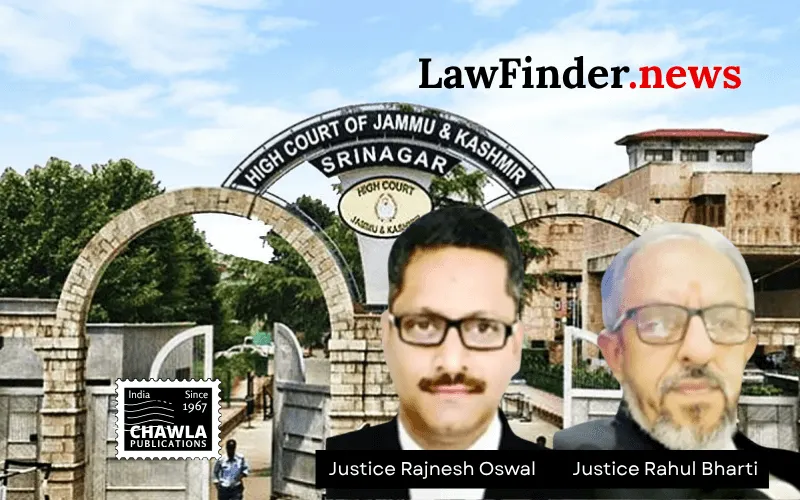
In a significant judgment, the Jammu and Kashmir High Court has set aside a Trial Court's order that dismissed a 16-year-old civil suit for non-prosecution, thereby emphasizing the importance of adjudicating cases on their merits rather than technical grounds. The division bench comprising Justices Rajnesh Oswal and Rahul Bharti ruled in favor of M/s Ram Kour Behari Lal and Co., allowing their appeal against the order dated May 22, 2023, which had dismissed their application for condonation of delay and restoration of the civil suit.
The case, initially filed for the recovery of Rs. 5.58 lakh, had reached the final arguments stage when it was dismissed on May 28, 2011, due to the absence of the appellant's counsel. This absence was attributed to the transition of their counsel, Mr. Raman Sharma, to independent practice, a move which inadvertently led to the oversight in managing the case file within the chambers of M/s A.V. Gupta & Associates.
The High Court, in its judgment, highlighted the need for a justice-oriented approach, especially when a suit has matured for adjudication. It noted that the procedural lapse, such as the non-filing of a Vakalatnama, should not overshadow the substantial progress made in the case. The court also invoked the legal maxim "actus curiae neminem gravabit," meaning no one should suffer due to the actions or inactions of the court, to justify its decision to overlook procedural irregularities in favor of justice.
Citing precedents from the Supreme Court, including the cases of Jang Singh v. Brij Lal and Mool Chandra v. Union of India, the judgment underscored that courts must make every endeavor to decide on the merits of cases that have been diligently pursued. The court was critical of the Trial Court's mechanical approach and reiterated that the delay caused by genuine reasons should be condoned to ensure that justice is served.
The High Court's decision mandates the restoration of the suit to its original number and remands the matter back to the Trial Court for adjudication on merits, with parties scheduled to appear on March 2, 2026. This judgment reinforces the judiciary's commitment to ensuring that litigants are afforded the opportunity to have their cases decided based on their substantive merits rather than being thwarted by procedural technicalities.
Bottom Line:
Application for condonation of delay and restoration of a dismissed suit should be considered liberally, especially when the suit has been diligently pursued for a long period and is at the stage of final arguments. Procedural lapses or technical irregularities such as non-filing of Vakalatnama should not be fatal to the adjudication of the matter on merits.
Statutory provision(s): Civil Procedure Code (J&K), 1920 - Order 17, Rule 2; Commercial Courts Act, 2015 - Section 13(2)