Court dismisses petition to quash FIR, highlights necessity of further investigation into allegations of criminal conspiracy and corruption.
In a significant ruling, the Jammu and Kashmir High Court has dismissed a petition seeking to quash an FIR filed against former J&K Bank Chairman Parvez Ahmad Nengroo and others. The case involves allegations of criminal conspiracy, abuse of official position, and corruption in the awarding of an insurance contract to M/S IFFCO TOKIO General Insurance Company Ltd. The court emphasized that the investigation must continue to thoroughly probe these allegations and the roles of the accused individuals.
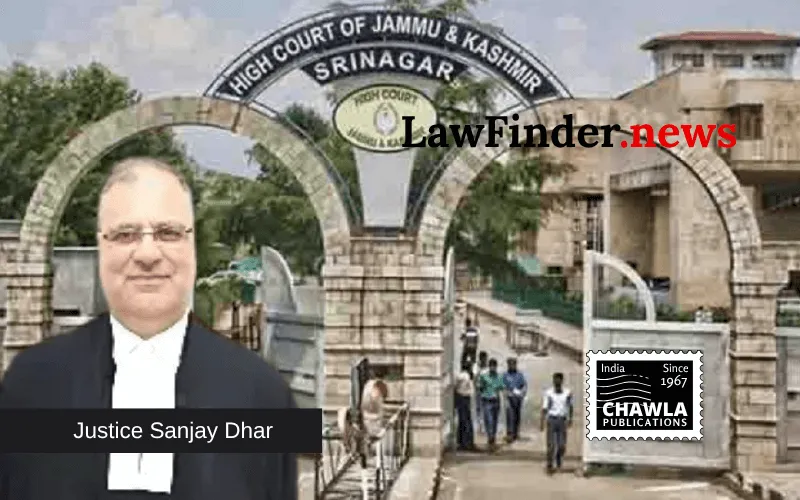
The FIR, registered under Section 5(1)(d) read with 5(2) of the J&K Prevention of Corruption Act and Section 120-B RPC, was challenged by Pushap Kumar Tickoo and others. The petitioners, who were part of the committee evaluating bids, argued their limited role in the decision-making process, asserting they acted within regulatory norms. However, the High Court, led by Justice Sanjay Dhar, stated that the material collected during the investigation indicates a prima facie case of cognizable offences, necessitating further investigation.
The court's decision was influenced by findings that linked the appointment of Asif Manzoor Beigh, a relative of Nengroo, to the insurance contract awarded to IFFCO TOKIO. The investigation revealed Beigh's employment with the company shortly after the contract agreement, suggesting a quid pro quo arrangement. The court noted that there are strong circumstances indicating misuse of official position by Nengroo to benefit his relative.
The petitioners' counsel contended that the loss in commission calculated by the Investigating Agency was speculative and not reflective of the insurance business's complexities. Nonetheless, the court held that these issues require a deeper probe, particularly regarding the petitioners' involvement in the alleged conspiracy.
The court cited precedents, including M/S Neeharika Infrastructure Pvt. Ltd. v. State of Maharashtra, reinforcing the principle that investigations into cognizable offences should not be prematurely curtailed. The decision underscores the judiciary's role in supporting thorough investigations while maintaining a balance with the rights of the accused.
The petitioners retain the liberty to approach the court again after the investigation concludes or a final report is filed. The ruling highlights the judiciary's cautious approach in handling cases involving allegations of high-level corruption, ensuring that justice is served through comprehensive investigations.
Bottom line:-
The High Court dismissed the petition to quash the FIR, emphasizing that prima facie cognizable offences were disclosed and that further investigation into the role of the petitioners was necessary. The court held that it would be inappropriate to interfere at the investigation stage without allowing the Investigating Agency to complete a deeper probe.
Statutory provision(s):
Section 482 of the Criminal Procedure Code, Section 5(1)(d) and Section 5(2) of the J&K Prevention of Corruption Act, Section 120-B RPC.
Pushap Kumar Tickoo v. UT of J&K., (Jammu And Kashmir) : Law Finder Doc id # 2899951