Court Orders One-Time Settlement to Address Economic Realities, Directs Payment of Rs. 2.50 Lakhs
In a significant ruling, the Jammu and Kashmir High Court has upheld the decision of the Principal Sessions Judge, Ramban, denying maintenance to Sarita Devi, who has been living separately from her husband, Mohan Singh, by mutual consent since 1995. The court acknowledged the existence of a mutual separation agreement and concluded that Sarita Devi is disentitled to maintenance under Section 488(5) of the Criminal Procedure Code (Cr.P.C.).
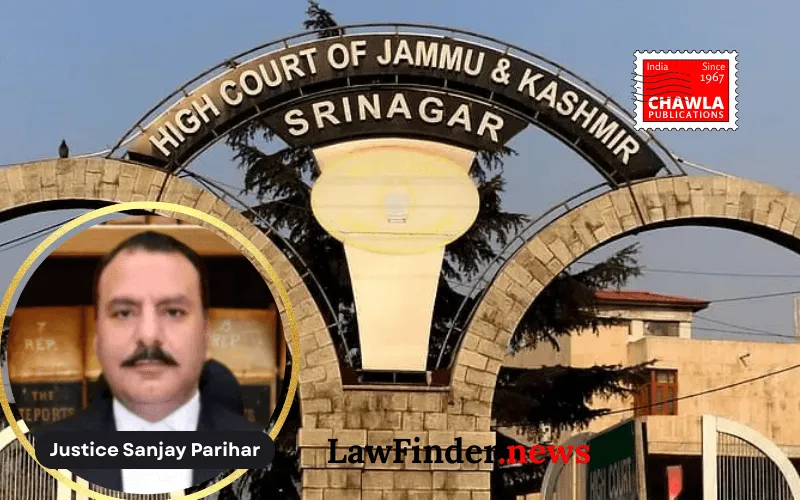
Presiding over the case, Justice Sanjay Parihar noted that the mutual separation agreement dated 28 August 1995 had been acted upon for several years, demonstrating the parties' intent to live apart. The court highlighted that Sarita Devi had consistently described herself as divorced in subsequent legal proceedings, further affirming the consensual nature of their separation.
Despite the denial of maintenance, the court recognized the potential economic hardships faced by Sarita Devi. In light of this, Justice Parihar directed Mohan Singh to pay a one-time settlement of Rs. 2.50 lakhs to Sarita Devi. This amount, intended to alleviate her financial plight, must be paid within six months, failing which interest will accrue until full realization.
The court's decision underscores the principle that private agreements, even if they do not amount to a legal dissolution of marriage, can influence the entitlement to maintenance. However, the court also emphasized that such agreements cannot override statutory provisions meant to prevent destitution.
This judgment comes after a complex history of legal proceedings between the couple. Initially married in 1990, Sarita Devi and Mohan Singh separated in 1995, with Sarita Devi withdrawing earlier maintenance claims upon receiving a settlement. Subsequent legal actions, including allegations of bigamy against Mohan Singh, did not result in a conviction.
The court's decision also references the importance of addressing changed circumstances over time, as contemplated under Section 31(2) of the J&K Hindu Marriage Act, 1980. The legislative intent is to ensure that economic realities faced by a dependent spouse are duly considered, especially when prior arrangements become inadequate.
Ultimately, the court's ruling provides a nuanced approach, balancing the enforcement of legal agreements with the necessity of addressing ongoing financial needs. As part of the judgment, the court ordered the release of deposited amounts and outlined steps for the one-time settlement, aiming to achieve substantial justice for Sarita Devi.
Bottom Line:
A wife living separately by mutual consent is disentitled to maintenance under Section 488(5) Cr.P.C., but private agreements cannot override statutory entitlement to maintenance, particularly in cases where circumstances may have changed over time.
Statutory provision(s):
Criminal Procedure Code, 1973 Section 488, Hindu Marriage Act, 1980 Section 31(2), Evidence Law (pertaining to admissions).
Sarita Devi v. Mohan Singh, (Jammu And Kashmir) : Law Finder Doc id # 2863364