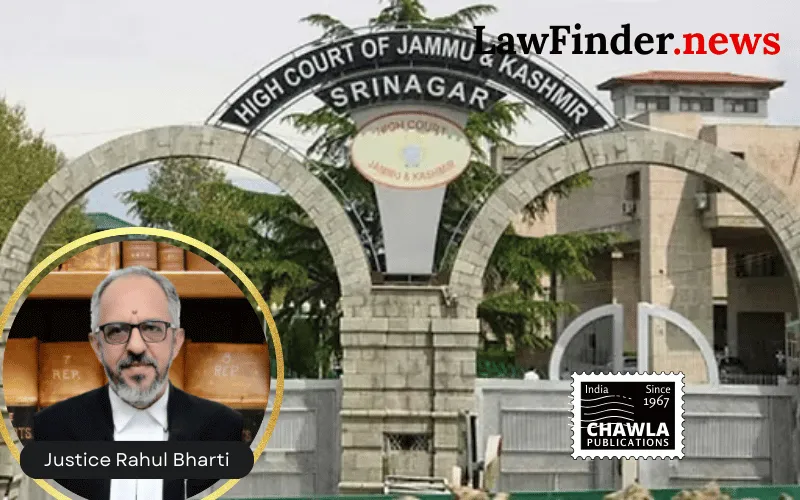
Court Orders Re-evaluation of Land Ownership and Directs Revival of Proceedings Under Section 133 CrPC
In a significant judgment delivered by Justice Rahul Bharti of the Jammu and Kashmir High Court, the court has emphasized the importance of strict adherence to procedural requirements in criminal proceedings related to public nuisance and air pollution. The case, Om Parkash v. Bodh Raj, involved a group of fifteen petitioners who invoked Section 133 of the Code of Criminal Procedure, 1973, seeking an order to restrain the respondents from activities causing air pollution in village Agore, tehsil Bhalwal district Jammu.
The petitioners alleged that the respondents had encroached upon state land to set up shops and storage sheds for their wholesale business of wheat fodder, causing significant air pollution and public nuisance. Initially, the Sub Divisional Magistrate (SDM) issued a conditional order to stop the activity, which was later made absolute. However, this final order was challenged by the respondents, leading to a revision petition before the 1st Additional Sessions Judge, Jammu.
The revisional court found procedural lapses in the SDM's exercise of jurisdiction, specifically referencing Sections 133 and 137 of the CrPC. Consequently, it set aside the SDM's order and remanded the matter for reconsideration. The petitioners then approached the High Court, invoking its inherent powers under Section 482 CrPC, in an attempt to salvage the SDM's initial order.
Justice Bharti dismissed the petition, reinforcing the necessity for procedural compliance. The High Court directed the SDM to verify whether the respondents' shops and storage sheds were located on state land or proprietary land. In case of encroachment on state land, the authorities were instructed to take necessary action to remove the encroachment.
The judgment also directed the SDM to issue fresh notices to all concerned parties to revive the proceedings, ensuring they are conducted in accordance with law. The court stressed that even if petitioners fail to appear, the SDM must verify the land ownership and proceed accordingly.
This judgment underscores the judiciary's commitment to procedural integrity, especially in cases involving public nuisance and environmental concerns, setting a precedent for similar cases in the future.
Bottom Line:
Proceedings under Section 133 of CrPC must strictly adhere to the procedural requirements laid down in the Code. A final order, even if well-meaning, cannot stand if the prescribed procedure is not followed.
Statutory provision(s): Section 133, Section 137, Section 482 of the Criminal Procedure Code, 1973
Om Parkash v. Bodh Raj, (Jammu And Kashmir) : Law Finder Doc id # 2844801