Court emphasizes statutory presumption under Section 139 of the Negotiable Instruments Act, dismisses petitioner's plea for handwriting analysis
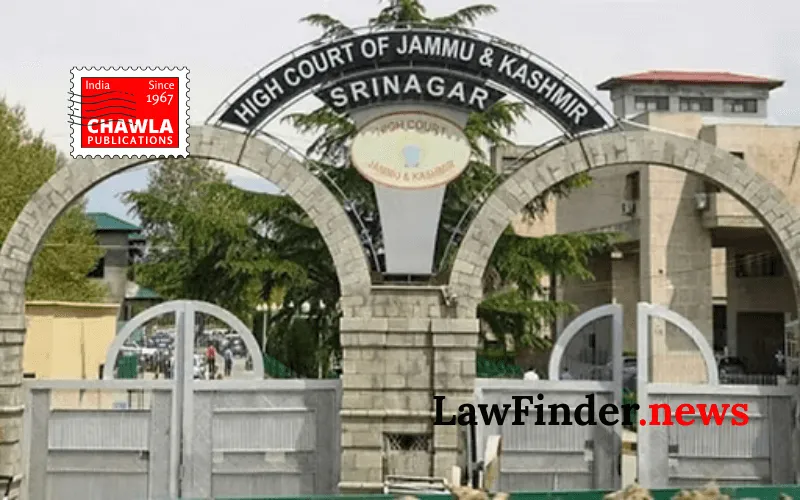
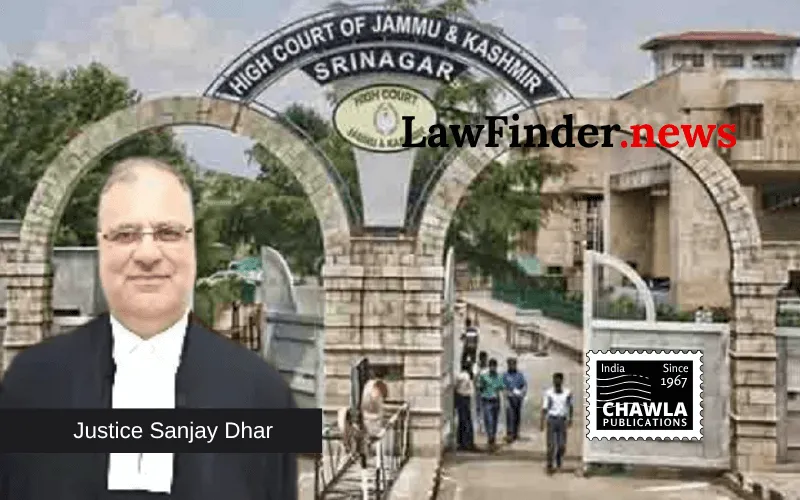
In a significant ruling, the Jammu and Kashmir High Court, Srinagar Bench, under the stewardship of Justice Sanjay Dhar, dismissed a petition challenging the rejection of a request for forensic examination of cheques involved in a dishonour case. The judgment underscores the robust presumption afforded to cheque holders under Section 139 of the Negotiable Instruments Act, 1881, reinforcing that the forensic examination to determine the handwriting on cheques is unwarranted and serves no purpose beyond delaying proceedings.
The case, Abdul Ahad Dar v. Mohammad Sidiq Dar, arose from a complaint filed by the respondent under Section 138 of the Negotiable Instruments Act, concerning the dishonour of three cheques, each valued at Rs. 1 lakh. The petitioner, Abdul Ahad Dar, contended that he had signed the cheques under coercion while in police custody, with the cheque details subsequently filled by a police officer. He sought forensic examination of the handwriting on the cheques to substantiate his claims.
The trial court had previously denied this request, prompting the petitioner to challenge the decision. The High Court, however, affirmed the trial court's stance, highlighting established legal principles regarding cheque issuance and presumption. Justice Sanjay Dhar articulated that once a cheque is signed by the drawer, it invokes a presumption in favor of the holder, shifting the burden of proof to the drawer to rebut the presumption through substantive evidence.
Citing the Supreme Court's ruling in Oriental Bank of Commerce v. Prabodh Kumar Tewari, the court reiterated that the involvement of a third party in filling cheque details does not negate the presumption under Section 139. Such an argument, according to the court, does not suffice to challenge the statutory presumption.
The judgment also addressed the petitioner's defense of coercion, suggesting that such claims could be substantiated through witness testimony rather than forensic examination. Justice Dhar emphasized the practicality and necessity of relying on witness accounts familiar with the circumstances surrounding the cheque issuance, rather than embarking on potentially futile forensic analysis.
Ultimately, the court found no merit in the petition, dismissing it and vacating interim directions previously issued. The ruling serves as a reminder of the stringent legal framework governing negotiable instruments in India, ensuring that procedural delays do not undermine the efficacy of the statutory provisions designed to protect cheque holders.
The court's decision reinforces the importance of timely and efficient adjudication in cheque dishonour cases, aiming to prevent unnecessary procedural delays that could hinder justice delivery. As the legal landscape evolves, such judgments play a crucial role in shaping how statutory provisions are interpreted and applied in real-world scenarios.
Bottom line:-
Negotiable Instruments Act - Forensic examination of cheques - Presumption under Section 139 - Once cheques are signed by the drawer, it is immaterial who fills in the details. Forensic examination to determine handwriting on cheque blanks is unnecessary and does not rebut the statutory presumption.
Statutory provision(s): Negotiable Instruments Act, 1881 Section 138, Section 139
Abdul Ahad Dar v. Mohammad Sidiq Dar, (Jammu And Kashmir)(Srinagar) : Law Finder Doc id # 2891864