Court affirms the necessity of following mandatory procedures under the Jammu and Kashmir Land Revenue (Partition) Rules, 1970, and stresses the binding nature of consent orders.
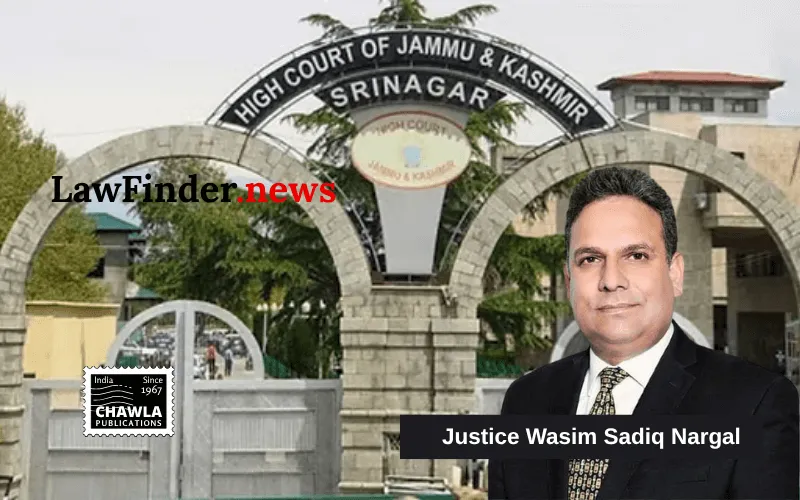
In a significant judgment, the Jammu and Kashmir High Court, presided over by Justice Wasim Sadiq Nargal, has upheld an order passed by the Revisional Authority concerning a land partition dispute in Jammu. The case, titled "Sikander Sharma v. Additional Commissioner, Jammu," involved a challenge to a consent order passed by the Additional Commissioner of Jammu, which directed the continuation of partition proceedings under the Jammu and Kashmir Land Revenue (Partition) Rules, 1970.
The petitioner, Sikander Sharma, had contested the order dated January 6, 2021, which mandated the lower court to proceed with the partition process after ensuring compliance with the relevant partition rules and providing an opportunity for all interested parties to be heard. This order had initially been consented to by the counsel representing both parties.
The crux of the petitioner's argument was that the private respondents were not in possession of the land and had not filed a suit for possession, as required under Rule 12 of the Partition Rules. The petitioner asserted that the initial order keeping the partition application in abeyance due to the lack of possession should have been upheld. However, the Revisional Authority had vacated the status quo, allowing the proceedings to continue.
The court highlighted the binding nature of consent orders, referencing Section 96(3) of the Civil Procedure Code, 1908, which establishes that consent orders cannot be challenged in the absence of fraud, misrepresentation, or a patent jurisdictional error. The court emphasized that consent given by the counsel, acting within their authority, is binding on the parties they represent.
Justice Nargal reiterated the importance of adhering to the procedural requirements under the Partition Rules, ensuring that all parties are provided with a fair opportunity to present their case. The court found no legal infirmity in the Revisional Authority’s order, which merely directed procedural compliance without causing prejudice to the petitioner.
The judgment underscores the principle that consent decrees create an estoppel by judgment, preventing parties from reopening settled matters unless there is a substantial reason to do so. This decision aligns with the legal precedent set in previous cases like "Ajanta LLP v. Casio Keisanki Kabushiki Kaisha" and "Sooba v. Amar Nath Krishan Lal," reinforcing the sanctity of consent orders in the judicial process.
By vacating the interim stay previously granted, the High Court has cleared the path for the lower court to resume partition proceedings in accordance with the established rules, ensuring justice is served through due process.
Bottom Line:
Partition proceedings under Jammu and Kashmir Land Revenue (Partition) Rules, 1970 - Consent order passed by the Revisional Authority cannot be challenged unless there is fraud, misrepresentation, or patent lack of jurisdiction.
Statutory provision(s):
Jammu and Kashmir Land Revenue (Partition) Rules, 1970 Rule 12, Civil Procedure Code, 1908 Section 96(3)
Sikander Sharma v. Additional Commissioner, Jammu, (Jammu And Kashmir) : Law Finder Doc id # 2853075