Court Directs State to Acquire Private Land or Return It to Owners, Dismissing Claims of Adverse Possession
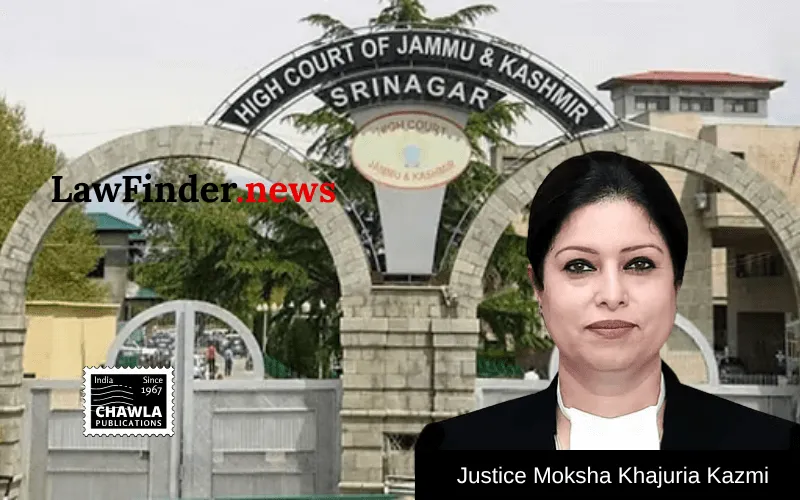
In a significant ruling, the Jammu and Kashmir High Court has reinforced the constitutional protection of property rights, ordering the Union Territory of Jammu and Kashmir to either initiate the acquisition process for a disputed piece of land or return it to the rightful owners, Pushpa Devi and others. The judgment, delivered by Justice Moksha Khajuria Kazmi, emphasizes that the State cannot claim ownership of private property through adverse possession, a practice deemed unconstitutional and contrary to public trust.
The case arose when Pushpa Devi and her co-petitioners filed a writ petition seeking the recovery of their ancestral land in Katra, which had been used by the municipal authorities since 1968 for parking and public use without compensation or formal acquisition. The petitioners argued that their right to property, protected under Article 300A of the Indian Constitution, was being violated as the State continued to occupy their land without legal sanction.
The State had contended that its long-standing possession of the land amounted to adverse possession, a claim rejected by the court. Citing precedents such as the Supreme Court's decision in Vidya Devi v. State of Himachal Pradesh, the High Court reiterated that a welfare state cannot perfect its title over a citizen's property via adverse possession. Such a stance undermines constitutional rights and erodes public trust in the government.
The court also addressed the issue of delay and laches, which the State used as a defense, arguing that the petitioners had taken too long to assert their rights. Justice Kazmi dismissed this argument, stating that delay cannot bar relief in cases where fundamental rights are breached, or where judicial conscience is shocked by the circumstances.
In its conclusion, the High Court ordered the State to commence the acquisition process under the Right to Fair Compensation and Transparency in Land Acquisition, Rehabilitation and Resettlement Act, 2013, or alternatively, to return the land to the petitioners if it no longer serves public interest. The court has set a six-month deadline for the completion of this process, ensuring that the petitioners receive the justice they sought.
Bottom Line:
Right to Property - Ownership of property is protected under Article 300A of the Constitution - State cannot deprive a person of property without authority of law.
Statutory provision(s): Article 300A of the Constitution of India, Right to Fair Compensation and Transparency in Land Acquisition, Rehabilitation and Resettlement Act, 2013.