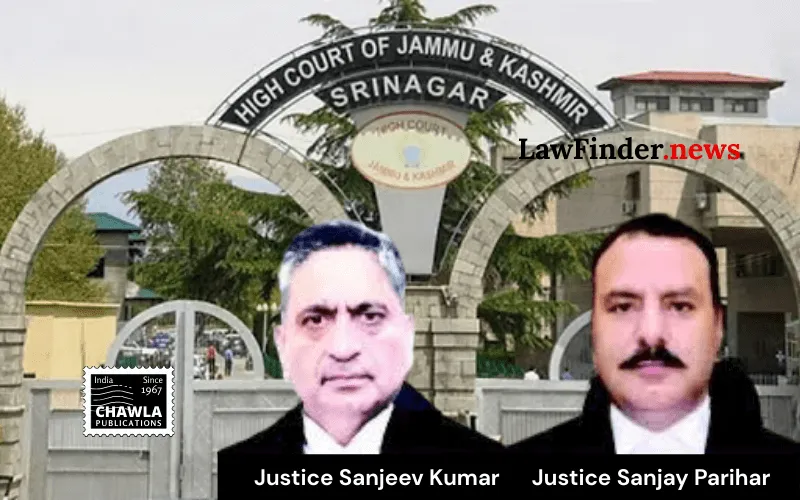
Court emphasizes doctrine of delay and laches, affirms regular appointments over irregular ones in seniority disputes
In a significant judgment, the Jammu and Kashmir High Court has dismissed a petition challenging the seniority list of Munsiffs issued by the High Court, emphasizing the doctrine of delay and laches and the precedence of regular appointments over irregular ones. The judgment was delivered by a division bench comprising Mr. Sanjeev Kumar and Mr. Sanjay Parihar, JJ.
The petition, filed by Tabassum Qadir Parray and others, sought to quash the seniority list of Munsiffs issued on November 19, 2011, and requested a revision of their seniority based on their merit positions in the selection list. The petitioners argued that their appointment was delayed due to administrative errors, and they should be placed higher in the seniority list based on their merit.
The High Court, however, found that the seniority list, finalized and acted upon since 2011, could not be disturbed due to delay and laches, particularly when promotions had already been made based on the settled seniority. The court noted that seniority issues affecting third parties cannot be unsettled after a long delay, as it results in administrative complications and affects others who have moved up the ladder of seniority.
The bench also addressed the issue of appointments made irregularly or "de hors" the rules, stating that such appointments cannot claim seniority over regularly appointed candidates. The court clarified that the petitioners were appointed against future vacancies due to administrative errors, and their appointments did not grant them precedence over candidates appointed against clear vacancies.
Referring to Rule 24 of the Jammu and Kashmir Civil Services (Classification, Control, and Appeal) Rules, 1956, the court reiterated that seniority is determined by the date of first substantive appointment, and appointments based on irregular processes cannot disturb the seniority of regularly appointed candidates.
The court highlighted the legal position established in previous Supreme Court judgments, including "Shankarsan Dash v. Union of India" and "Sudesh Kumar Goyal v. State of Haryana," affirming that selected candidates do not acquire an indefeasible right to appointment and that appointments made irregularly cannot take precedence in seniority matters.
In dismissing the petition, the court emphasized the importance of timely challenges to seniority lists, stating that a seniority list that remains unchallenged for several years should not be disturbed unless satisfactory explanations for delay are provided. The court concluded that the petition was devoid of merit and affected by delay and laches.
The judgment reinforces the principle that seniority once settled and acted upon should not be unsettled due to delay and highlights the precedence of regular appointments in civil service disputes.
Bottom line:-
Seniority once settled and acted upon cannot be unsettled after a long delay, especially in cases involving promotions and administrative complications. Appointments made irregularly or de hors the rules cannot take precedence over regular appointments in matters of seniority.
Statutory provision(s): Rule 24 of Jammu and Kashmir Civil Services (Classification, Control, and Appeal) Rules, 1956